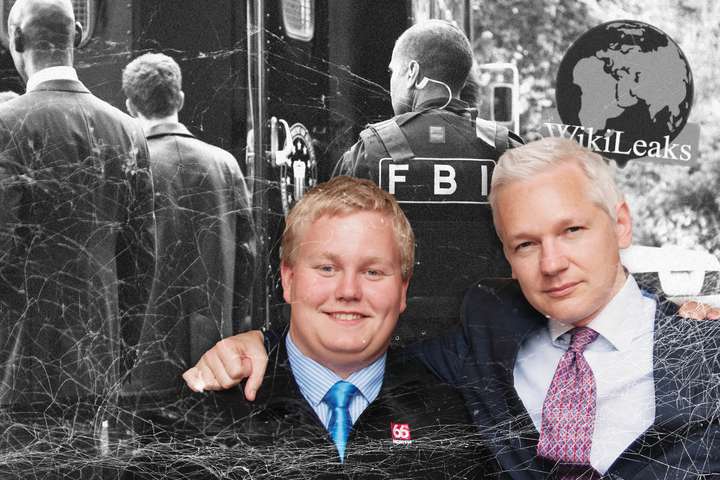


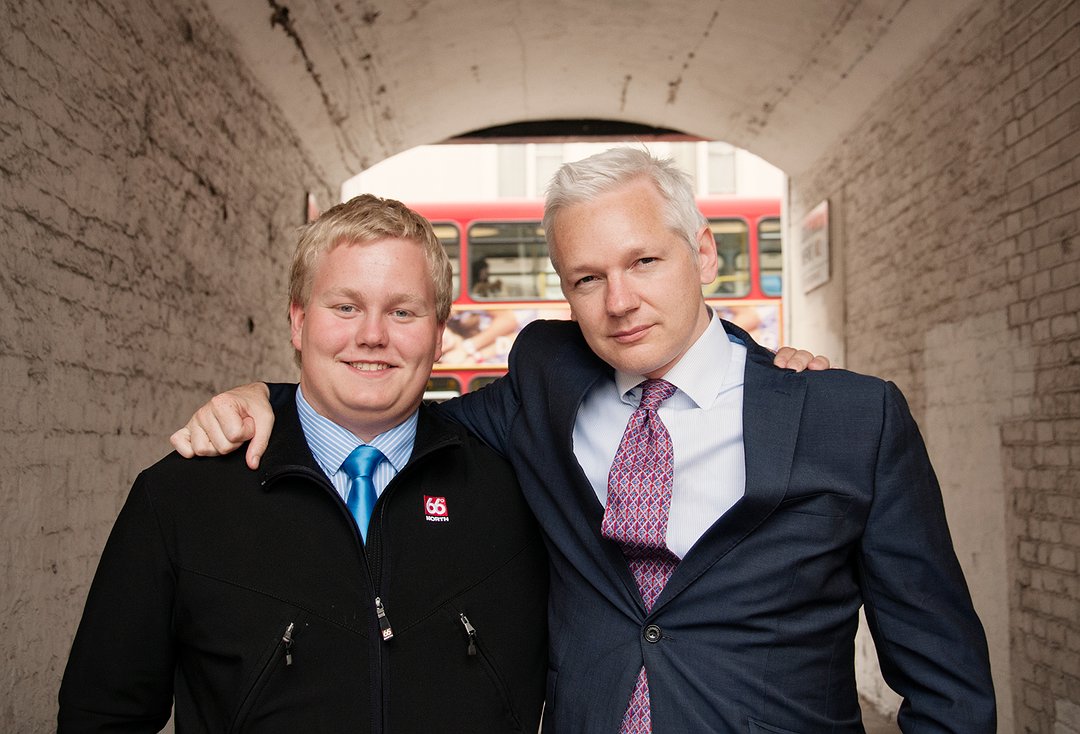
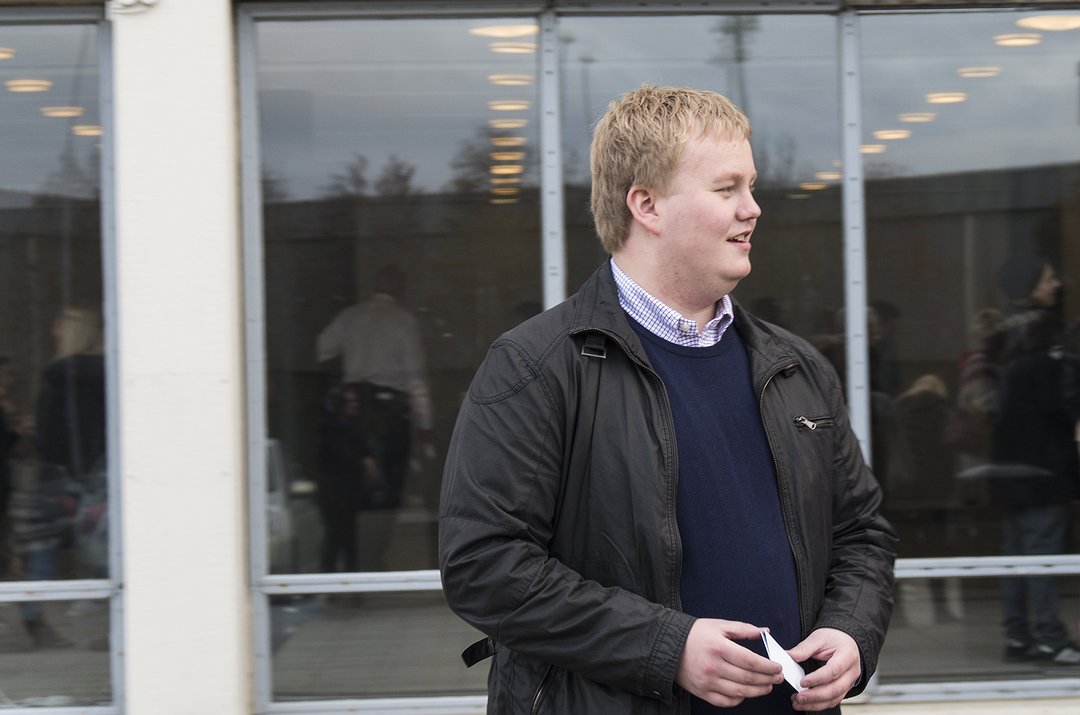
A major witness in the United States’ Department of Justice case against Julian Assange has admitted to fabricating key accusations in the indictment against the Wikileaks founder. The witness, who has a documented history with sociopathy and has received several convictions for sexual abuse of minors and wide-ranging financial fraud, made the admission in a newly published interview in Stundin where he also confessed to having continued his crime spree whilst working with the Department of Justice and FBI and receiving a promise of immunity from prosecution.
The man in question, Sigurdur Ingi Thordarson, was recruited by US authorities to build a case against Assange after misleading them to believe he was previously a close associate of his. In fact he had volunteered on a limited basis to raise money for Wikileaks in 2010 but was found to have used that opportunity to embezzle more than $50,000 from the organization. Julian Assange was visiting Thordarson’s home country of Iceland around this time due to his work with Icelandic media and members of parliament in preparing the Icelandic Modern Media Initiative, a press freedom project that produced a parliamentary resolution supporting whistleblowers and investigative journalism.
The United States is currently seeking Assange’s extradition from the United Kingdom in order to try him for espionage relating to the release of leaked classified documents. If convicted, he could face up to 175 years in prison. The indictment has sparked fears for press freedoms in the United States and beyond and prompted strong statements in support of Assange from Amnesty International, Reporters without borders, the editorial staff of the Washington Post and many others.
US officials presented an updated version of an indictment against him to a Magistrate court in London last summer. The veracity of the information contained therein is now directly contradicted by the main witness, whose testimony it is based on.
No instruction from Assange
The court documents refer to Mr Thordarson simply as “Teenager” (a reference to his youthful appearance rather than true age, he is 28 years old) and Iceland as “NATO Country 1” but make no real effort to hide the identity of either. They purport to show that Assange instructed Thordarson to commit computer intrusions or hacking in Iceland.
The aim of this addition to the indictment was apparently to shore up and support the conspiracy charge against Assange in relation to his interactions with Chelsea Manning. Those occurred around the same time he resided in Iceland and the authors of the indictment felt they could strengthen their case by alleging he was involved in illegal activity there as well. This activity was said to include attempts to hack into the computers of members of parliament and record their conversations.
In fact, Thordarson now admits to Stundin that Assange never asked him to hack or access phone recordings of MPs. His new claim is that he had in fact received some files from a third party who claimed to have recorded MPs and had offered to share them with Assange without having any idea what they actually contained. He claims he never checked the contents of the files or even if they contained audio recordings as his third party source suggested. He further admits the claim, that Assange had instructed or asked him to access computers in order to find any such recordings, is false.
Nonetheless, the tactics employed by US officials appear to have been successful as can be gleaned from the ruling of Magistrate Court Judge Vanessa Baraitser on January 4th of this year. Although she ruled against extradition, she did so purely on humanitarian grounds relating to Assange’s health concerns, suicide risk and the conditions he would face in confinement in US prisons. With regards to the actual accusations made in the indictment Baraitser sided with the arguments of the American legal team, including citing the specific samples from Iceland which are now seriously called into question.
Other misleading elements can be found in the indictment, and later reflected in the Magistrate’s judgement, based on Thordarson’s now admitted lies. One is a reference to Icelandic bank documents. The Magistrate court judgement reads: “It is alleged that Mr. Assange and Teenager failed a joint attempt to decrypt a file stolen from a “NATO country 1” bank”.
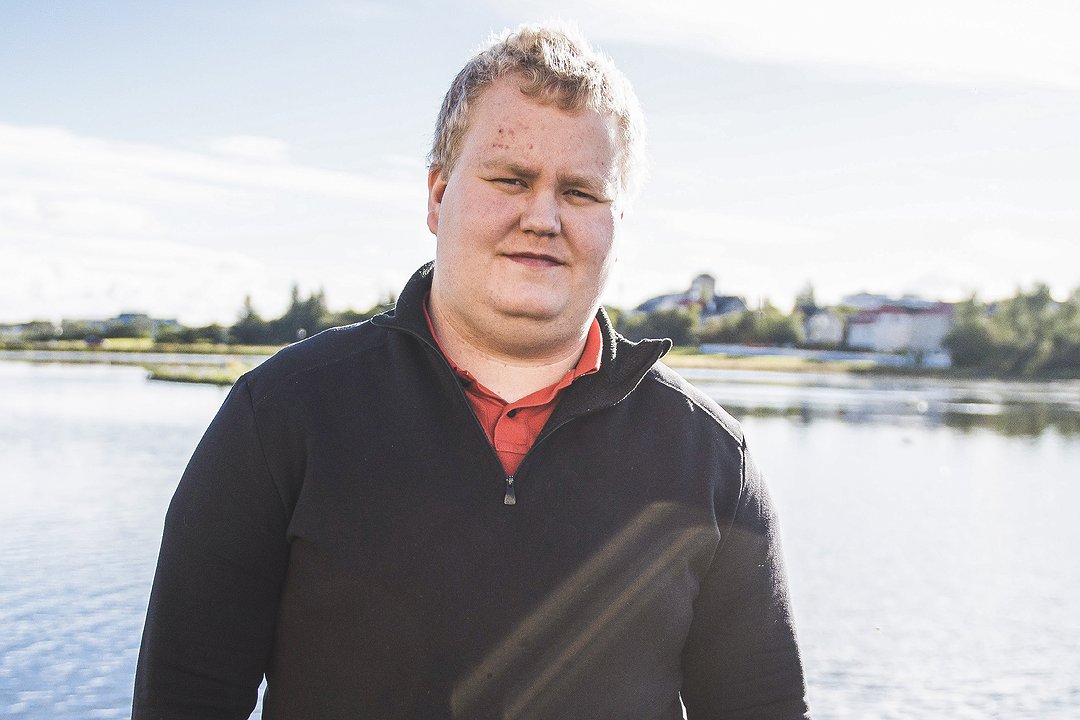
Thordarson admits to Stundin that this actually refers to a well publicised event in which an encrypted file was leaked from an Icelandic bank and assumed to contain information about defaulted loans provided by the Icelandic Landsbanki. The bank went under in the fall of 2008, along with almost all other financial institutions in Iceland, and plunged the country into a severe economic crisis. The file was at this time, in summer of 2010, shared by many online who attempted to decrypt it for the public interest purpose of revealing what precipitated the financial crisis. Nothing supports the claim that this file was even “stolen” per se, as it was assumed to have been distributed by whistleblowers from inside the failed bank.
More deceptive language emerges in the aforementioned judgment where it states: “...he [Assange] used the unauthorized access given to him by a source, to access a government website of NATO country-1 used to track police vehicles.”
This depiction leaves out an important element, one that Thordarson clarifies in his interview with Stundin. The login information was in fact his own and not obtained through any nefarious means. In fact, he now admits he had been given this access as a matter of routine due to his work as a first responder while volunteering for a search and rescue team. He also says Assange never asked for any such access.
Revealing chat logs
Thordarson spoke with a journalist from Stundin for several hours as he prepared a thorough investigative report into his activities that include never before published chat logs and new documents.
The chat logs were gathered by Thordarson himself and give a comprehensive picture of his communications whilst he was volunteering for Wikileaks in 2010 and 11. It entails his talks with WikiLeaks staff as well as unauthorized communications with members of international hacking groups that he got into contact with via his role as a moderator on an open IRC WikiLeaks forum, which is a form of live online chat. There is no indication WikiLeaks staff had any knowledge of Thordarson’s contacts with aforementioned hacking groups, indeed the logs show his clear deception.
The communications there show a pattern where Thordarson is constantly inflating his position within WikiLeaks, describing himself as chief of staff, head of communications, No 2 in the organization or responsible for recruits. In these communications Thordarson frequently asks the hackers to either access material from Icelandic entities or attack Icelandic websites with so-called DDoS attacks. These are designed to disable sites and make them inaccessible but not cause permanent damage to content.
Stundin cannot find any evidence that Thordarson was ever instructed to make those requests by anyone inside WikiLeaks. Thordarson himself is not even claiming that, although he explains this as something Assange was aware of or that he had interpreted it so that this was expected of him. How this supposed non-verbal communication took place he cannot explain.
Furthermore, he never explained why WikiLeaks would be interested in attacking any interests in Iceland, especially at such a sensitive time while they were in the midst of publishing a huge trove of US diplomatic cables as part of an international media partnership. Assange is not known to have had any grievances with Icelandic authorities and was in fact working with members of parliament in updating Iceland’s freedom of press laws for the 21st century.
On the FBI radar
Thordarson's rogue acts were not limited to communications of that nature as he also admits to Stundin that he set up avenues of communication with journalists and had media pay for lavish trips abroad where he mispresented himself as an official representative of WikiLeaks.
He also admits that he stole documents from WikiLeaks staff by copying their hard drives. Among those were documents from Renata Avila, a lawyer who worked for the organization and Mr. Assange.
Thordarson continued to step up his illicit activities in the summer of 2011 when he established communication with “Sabu”, the online moniker of Hector Xavier Monsegur, a hacker and a member of the rather infamous LulzSec hacker group. In that effort all indications are that Thordarson was acting alone without any authorization, let alone urging, from anyone inside WikiLeaks.
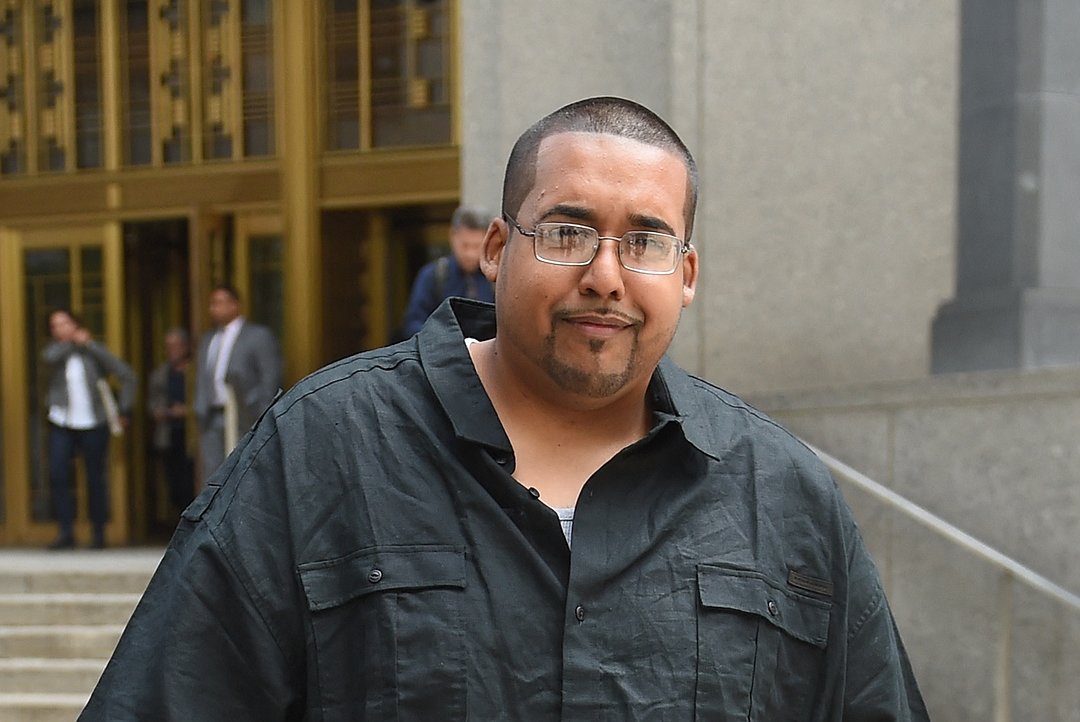
What Thordarson did not know at the time was that the FBI had arrested Sabu in the beginning of June 2011 and threatened him into becoming an informant and a collaborator for the FBI. Thus, when Thordarson continued his previous pattern of requesting attacks on Icelandic interests, the FBI knew and saw an opportunity to implicate Julian Assange.
Later that month a DDoS attack was performed against the websites of several government institutions.
That deed was done under the watchful eyes of the FBI who must have authorized the attack or even initiated it, as Sabu was at that point their man. What followed was an episode where it seems obvious that Icelandic authorities were fooled into cooperation under false pretenses.
Ögmundur Jónasson was minister of interior at time and as such the political head of police and prosecution and says of the US activities: “They were trying to use things here [in Iceland] and use people in our country to spin a web, a cobweb that would catch Julian Assange”.
“They were trying to use things here [in Iceland] and use people in our country to spin a web, a cobweb that would catch Julian Assange”
Jónasson recalls that when the FBI first contacted Icelandic authorities on June 20th 2011 it was to warn Iceland of an imminent and grave threat of intrusion against government computers. A few days later FBI agents flew to Iceland and offered formally to assist in thwarting this grave danger. The offer was accepted and on July 4th a formal rogatory letter was sent to Iceland to seal the mutual assistance.. Jónasson speculates that already then the US was laying the groundwork for its ultimate purpose, not to assist Iceland but entrap Julian Assange:
“What I have been pondering ever since is if the spinning of the web had already started then with the acceptance of the letter rogatory establishing cooperation that they could use as a pretext for later visits,” says Jónasson.
Icelandic policemen were sent to the US to gather further evidence of this so-called imminent danger and Jónasson says he does not recall anything of substance coming out of that visit and no further attacks were made against Icelandic interests.
But the FBI would return.
Icelandic officials deceived by the US
Towards the end of August, Thordarson was being pursued by WikiLeaks staff who wished to locate the proceeds of online sales of WikiLeaks merchandise. It emerged Thordarson had instructed the funds be sent to his private bank account by forging an email in the name of Julian Assange.
Thordarson saw a way out and on August 23d he sent an email to the US Embassy in Iceland offering information in relation to a criminal investigation. He was replied to with a call and confirmed that he was offering to be an informant in the case against Julian Assange.
The prosecutors and FBI were quick in responding and within 48 hrs a private jet landed in Reykjavik with around eight agents who quickly set up meetings with Thordarson and with people from the Icelandic State Prosecutors office and the State Police Commissioner.
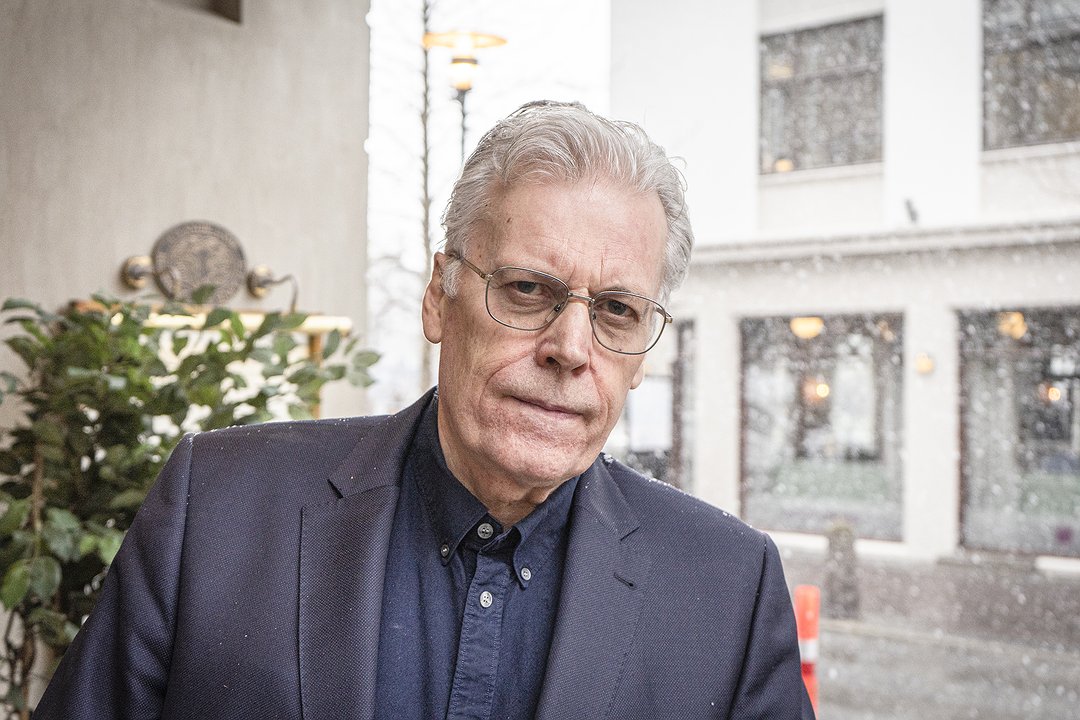
Mid day, Mr. Jónasson, then Minister of Interior got wind of this new visit and requested confirmation that this related to the same case as earlier in the summer. “I asked on what rogatory letter this visit was based and if this was exactly the same case”, Jónasson says in an interview with Stundin. “I then found out that this was of a totally different nature than previously discussed”. He says he put two and two together and said it was obvious that the intention was to lay a trap in Iceland for Assange and other staff members of WikiLeaks.
Such actions were according to Jónasson way outside the scope of the agreement and thus he ordered that all cooperation with the agents be stopped and that they would be informed they were acting in Iceland without any authority. Only days later he learned that the agents and prosecutors had not yet left the country so the Ministry of Foreign Affairs contacted the US embassy with the demand they halt police work in Iceland and leave the country.
They did, but left with the new informant and “star witness”, Sigurdur Ingi Thordarson who flew with them to Denmark.
Not a hacker but a sociopath
Thordarson has been nicknamed Siggi the hacker in Iceland. That is actually an antonym as several sources Stundin has talked to claim that Thordarson's computer ability is menial. This is supported by several chat logs and documents where he is requesting assistance from others doing rather uncomplicated computer jobs. Once he even sought FBI expert help in uploading a video from his own phone.
The meeting in Denmark was the first of a few where the FBI enthusiastically embraced the idea of co-operation with Thordarson. He says they wanted to know everything about WikiLeaks, including physical security of staff. They took material he had gathered, including data he had stolen from WikiLeaks employees and even planned to send him to England with a wire. Thordarson claimed in interviews he had refused that particular request. It was probably because he was not welcomed anymore as he knew WikiLeaks people had found out, or were about to firmly establish, that he had embezzled funds from the organization.
After months of collaboration the FBI seem to have lost interest. At about the same time charges were piling up against Thordarson with the Icelandic authorities for massive fraud, forgeries and theft on the one hand and for sexual violations against underage boys he had tricked or forced into sexual acts on the other.
After long investigations Thordarson was sentenced in 2013 and 2014 and received relatively lenient sentences as the judge took into account that he changed his plea at court and pleaded guilty to all counts.
According to a psychiatric assessment presented to the court Thordarson was diagnosed as a sociopath, incapable of remorse but still criminally culpable for his actions. He was assessed to be able to understand the basic difference between right and wrong, He just did not seem to care.
Incarceration did not seem to have an intended effect of stopping Thordarson from continuing his life of crime. It actually took off and expanded in extent and scope in 2019 when the Trump-era DoJ decided to revisit him, giving him a formal status as witness in the prosecution against Julian Assange and granting him immunity in return from any prosecution.
The New York Times Problem
In the month following Assange's arrest in the Ecuadorian Embassy in London on April 11th 2019 a new rogatory letter arrived in the Ministry of Justice in Iceland. This time the request was to take a formal statement from Thordarson in Iceland in the presence of his lawyer. The Ministry had a new political head at the time, who had limited knowledge of the prior history of the case.
Although the Department of Justice had spent extreme resources attempting to build a case against Julian Assange during the Obama presidency, they had decided against indicting Assange. The main concern was what was called “The New York Times Problem”, namely that there was such a difficulty in distinguishing between WikiLeaks publications and NYT publications of the same material that going after one party would pose grave First Amendment concerns.
President Donald Trump's appointed Attorney general William Barr did not share these concerns, and neither did his Trump-appointed deputy Kellen S. Dwyer. Barr, who faced severe criticism for politicizing the DoJ on behalf of the president, got the ball rolling on the Assange case once again. Their argument was that if they could prove he was a criminal rather than a journalist the charges would stick, and that was where Thordarson’s testimony would be key.
In May 2019 Thordarson was offered an immunity deal, signed by Dwyer, that granted him immunity from prosecution based on any information on wrong doing they had on him. The deal, seen in writing by Stundin, also guarantees that the DoJ would not share any such information to other prosecutorial or law enforcement agencies. That would include Icelandic ones, meaning that the Americans will not share information on crimes he might have committed threatening Icelandic security interests – and the Americans apparently had plenty of those but had over the years failed to share them with their Icelandic counterparts.
In any event, Assange has never been suspected of any wrongdoing in Iceland. Stundin has seen confirmation of this from the District Prosecutor in Iceland, the Reykjavik Metropolitan Police. Assange has no entry in the LÖKE database of any police activity linked to an individual collected by the Icelandic State Police Commissioner from 2009-2021.
Assange's lawyer also inquired in the Icelandic Foreign Ministry if the points in his updated indictment where Iceland is referred to as NATO country 1 meant that his case had any relevance to Icelandic membership to NATO, the bilateral defense agreement between USA and Iceland or any national security interests. All such connections were dismissed in a reply from the defense attache at the Ministry.
Immunity and a new crimespree
According to information obtained by Stundin the immunity deal between DoJ and Thordarson was presented at the Headquarters of the Reykjavik police where the only role of the Icelandic policeman was to confirm the identity of Thordarson before leaving him alone with his lawyer in the back room where he met the US delegation.
It is as if the offer of immunity, later secured and sealed in a meeting in DC, had encouraged Thordarson to take bolder steps in crime. He started to fleece individuals and companies on a grander scale than ever; usually by either acquiring or forming legal entities he then used to borrow merchandise, rent luxury cars, even order large quantities of goods from wholesalers without any intention to pay for these goods and services.
Thordarson also forged the name of his own lawyer on notices to the Company House registry, falsely claiming to have raised the equity of two companies to over 800 thousand US dollars. The aim was to use these entities with solid financial positions on paper in a real estate venture.
The lawyer has reported the forgery to the police where other similar cases, along with multiple other reports of theft and trickery, are now piling up.
When confronted with evidence of all these crimes by a Stundin journalist he simply admitted to everything and explained it away as normal business practice. He has not yet been charged and is still practicing this “business”. Local newspaper DV reported last week that Thordarson had attempted to order merchandise on credit using a new company name, Icelandic Vermin Control. Despite using a fake name and a COVID face mask he was identified and the transaction was stopped. He was last seen speeding away in a white Tesla, according to DV.














Athugasemdir