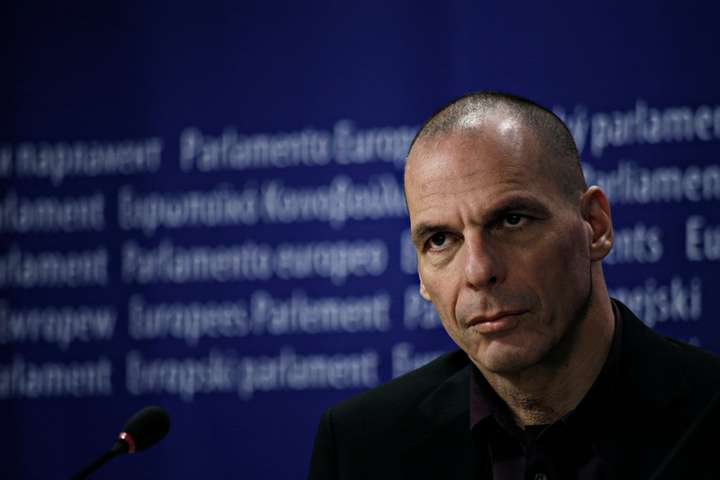

Former Greek Finance minister Yanis Varoufakis has been elected to lead the list of a new German political party in the European Parliament elections next year.
“It is an honour that I accept humbly. I accept it because my candidacy symbolises the end of the North-South divide,” Varoufakis told a press conference in Berlin on Sunday following the inauguration of Demokratie in Europa, a German party set up by the Democracy in Europe Movement (DiEM25) as part of a trans-national electoral effort aiming at radical restructuring and democratisation of the European Union.
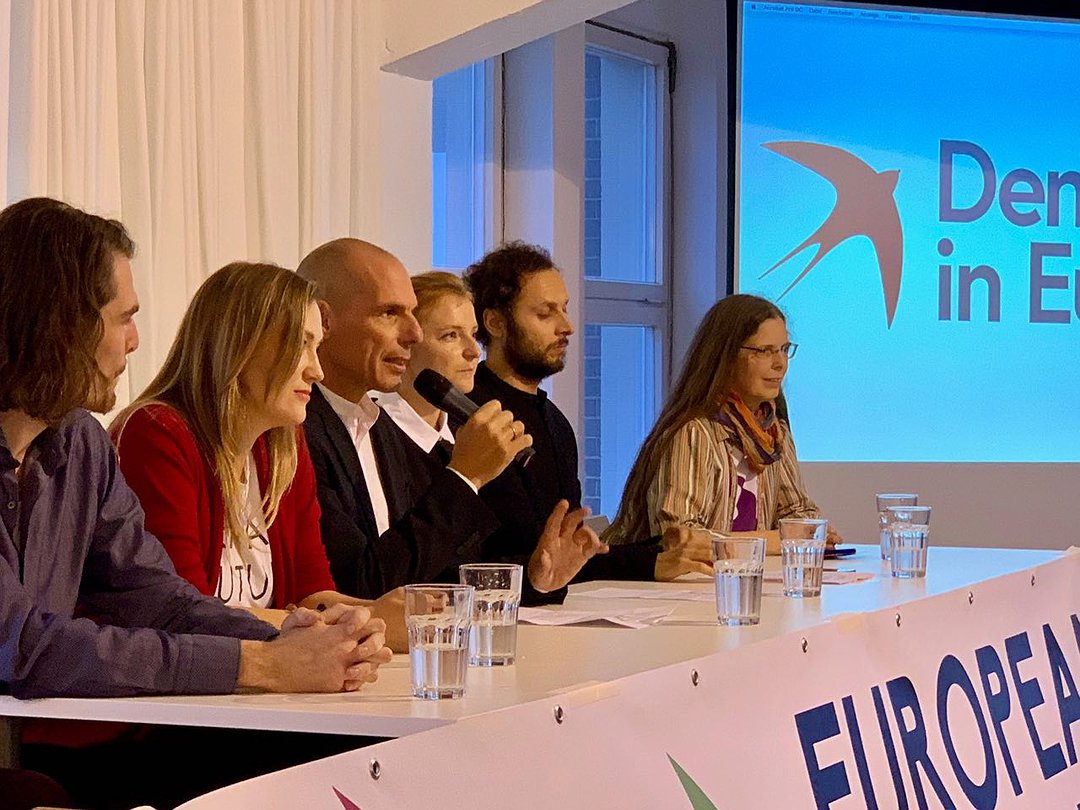
Yanis Varoufakis became the symbol of Europe’s anti-austerity movement when he confronted Greece’s creditors and the ‘Troika’ in 2015. He was highly critical of the economic policies pushed by Berlin during the eurozone crisis and has lambasted former finance minister of Germany, Wolfgang Schäuble, for “turning the eurozone into an iron cage of austerity that is the very antithesis of a democratic federation”.
While tirelessly criticising the structural framework of the eurozone, Varoufakis describes himself as a radical Europeanist and insists that the EU project should be reformed, not abandoned.
“Our position, therefore, toward
the EU is: In the EU, against this EU!”
“Dismantling the EU would come at an exorbitant cost to the weakest Europeans,” he tells Stundin. “This is why our movement, DiEM25, was set up to oppose, at once, the EU establishment and the disintegrationists who are calling for an exit from the EU either for nationalist reasons or as part of a left-wing narrative to reclaim democratic control. Our position, therefore, toward the EU is: In the EU, against this EU! - a position that we propose to defend in practice by means of constructive disobedience: constructive proposals seeking moderation and unflinching disobedience to austerity and authoritarian policies.”
When asked what he considers the great challenges for European progressives in the 21st century, Varoufakis replies: “Our greatest challenge is how to prevent ourselves from being crushed from the right by the racist Right and from the so-called centre by the increasingly authoritarian pseudo-liberal establishment whose policies fuel the inequality and discontent that… reinforce the racist Right.”
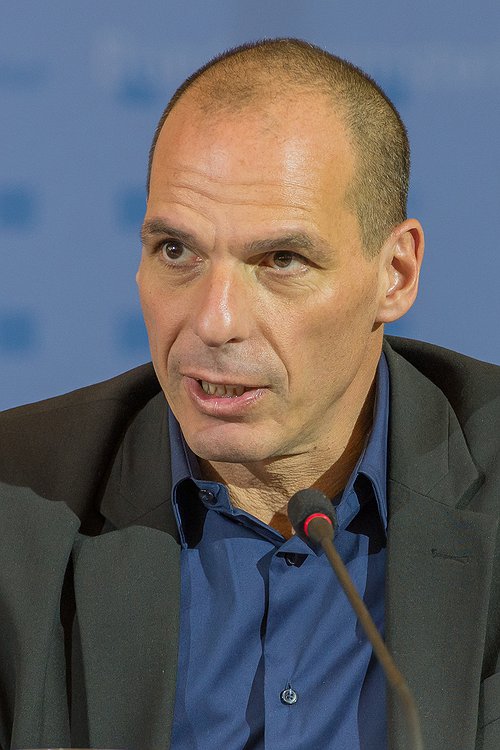
Varoufakis told the press conference on Sunday that the new party, Demokratie in Europa, had put forward a solid, comprehensive proposal of how to address Europe’s systemic crisis. “We call it a Green New Deal for Europe: a realistic, credible, rational and immediately implementable policy agenda for the whole of Europe.”
When asked about the Green New Deal and the viability of left-Keynesianism in the age of climate change, Varoufakis points out that climate change can only be properly addressed by mobilising massive resources to fund the green transition of our economy and society.
“Nothing less than 5% of GDP annually will do the trick. The question is: Where will the money come from? John Maynard Keynes, as well as the Roosevelt administration’s economists, had an excellent idea: Mobilise the idle cash of the idle rich not through taxes but through project bonds. Where Keynes is antiquated, but can easily be brought up to date, is that this cannot happen at the level of the nation-state. But it can happen at the international level.”
This, he says, is why DiEM25 is calling for a coordinated Green New Deal involving coordinated large-scale bond issues by all European public investment banks. “Meanwhile, our central banks stand by in the secondary bond market ready to buy these bonds if their interest rates begin to rise. In this manner, we will have a war chest of 5% of GDP to unleash against climate change. Once we have this, we can begin sensibly to talk about, and to fund, the important changes that need to be introduced in our daily life.”
But will it ever be possible to win mass support among the working and middle classes for radical action against climate change? Varoufakis believes so.
“First, we need to offer voters a realistic program. The Green New Deal that I sketched out is an example. However, we need to go further, as you say, in the direction of convincing the poor and the disenfranchised that green policies are good for them, not just good for polar bears and for the flora. This we can most certainly achieve if we use, for example, a carbon tax to fund social housing and education in support of the weaker citizens. Such a policy mix, that can turn the working class into committed environmentalists, is what DiEM25 has been working upon, leading to our European New Deal policy agenda.”
“We need to convince the poor and
the disenfranchised that green
policies are good for them, not just good
for polar bears and for the flora”
As an EU citizen who has residential address in Germany, Varoufakis meets the conditions to stand as candidate there. While contesting the European Parliament elections in Germany next May, Varoufakis will continue to lead the Greek branch of DiEM25, MeRA25, and plans to campaign across Europe as a potential Spitzenkandidat.
“The EU will either be democratised or it will disintegrate,” he tells Stundin. “And if, in the end, it does disintegrate only the forces of neo-fascism will be strengthened across the continent.“
Evrópumál

Kosningaauglýsing Þjóðmála pöntuð fyrir Áfram Ísland
Farage óskar Íslendingum til hamingju


Jón Trausti Reynisson
Að sjá í gegnum áróðurinn

Sjávarútvegsfyrirtæki styrkja nei-hreyfinguna og öfgahægri öfl í Evrópu

Nei-sinnar auglýsa „raunverulega hættu á“ sæstreng frá ESB
















Athugasemdir