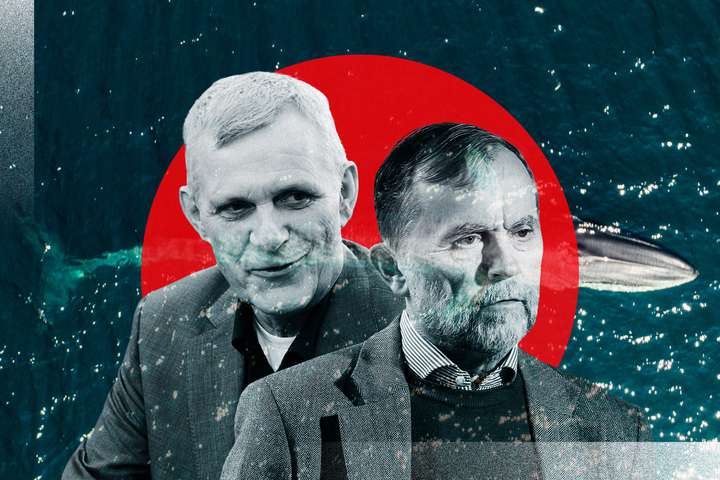


“We can never talk about that he is doing it for his friend,” said Gunnar Bergmann, a former chairman of the Minke Whalers’ Association, in a secret video recording. Gunnar was describing plans that his father Jón Gunnarsson, a member of parliament for the Independence Party, allegedly made with the party’s chairman, Bjarni Benediktsson, to grant a whaling licence to his friend Kristján Loftsson, CEO and principal owner of Hvalur hf.
A secret recording of Gunnar’s conversation with a person who posed as an investor revealed political horse-trading to ensure that the controversial practice of hunting whales would continue in Iceland, even if political parties that oppose it were to come to power.
The recordings, reportedly made by the private intelligence agency Black Cube for an international environmental organisation, were meticulously planned, time-consuming, and costly. They reached journalists at Heimildin who first reported on them on 11 November.
A few days earlier, Jón Gunnarsson had been appointed as a special envoy of Prime Minister Bjarni Benediktsson in the Ministry of Fisheries and Agriculture. The same day, Jón accepted the fifth place on the Independence Party’s list of candidates in the Southwest constituency, a spot that nearly guaranteed that he would lose his seat in Alþingi, Iceland’s parliament.
The position of special envoy did not grant Jón the authority to issue the whaling license himself, but according to Bjarni, Jón was tasked with advancing the matter and assisting him in decision-making.
In the recordings, made without the knowledge of Jón’s son and business partner, Gunnar Bergmann, he described the agreement between Bjarni and Jón. Among other things, he explained in detail how the license would be granted, adding that Bjarni had pressed his father to take a place on the list. “In the end, he said, ‘Okay, I'm ready to take the fifth seat. But you have to do something for me,’” Gunnar is heard saying about his father. “Because I know that he is leaving . So we actually don't care about anything else right now. […] This would be quite good legacy to leave.”
Gunnar noted that his father would not need to worry about retirement and mentioned that he could even take on a managerial position at Hvalur hf. if he wished.
Whaling Licenses Granted Following Election
In the 30 November elections, the government coalition parties lost their majority in parliament. Bjarni Benediktsson has since served as Prime Minister and Minister of Food, Agriculture, and Fisheries in a caretaker cabinet until a new government coalition could be formed.
Despite the revelations from the secret recordings having been published, Bjarn announced on 5 December that he had issued whaling licenses. One license was indeed granted to Hvalur hf., which allows the company to hunt fin whales for a period of five years. Another license was granted to the company Tjaldtangi ehf. and allows them to hunt minke whales with their vessel Halldór Sigurðsson ÍS.
Only fin whales and minke whales are permitted to be hunted off the coast of Iceland, while other whale populations are protected. The licenses are issued in accordance with the provisions of the Whaling Act from 1949, after receiving comments from the Directorate of Fisheries and the Marine Research Institute. "The licenses are granted for five years, as in 2009, 2014 and 2019, and thus some predictability in the industry is ensured,” a statement from the Ministry read.
The management of the exploitation of living marine resources in Iceland is under strict control and the total allowable catch of fin whales and minke whales should follow the fishing advice of the Marine Research Institute, which is based on sustainable exploitation and a precautionary approach.
Bjarni’s decision was criticised by environmental organisations, who argued that Bjarni was not in a position to act on the controversial issue of whaling as he is serving as caretaker Minister until a new coalition government can be formed. Talks are ongoing between the Social Democratic Alliance, the Liberal Reform Party, and the People’s Party to form a coalition which would exclude Bjarni’s Independence Party from power for the first time since 2013.
Landvernd, the Icelandic Environment Association, and Young Environmentalists expressed their surprise and disapproval of the issuance of whaling permits. They argued that the decision was undemocratic due to Bjarni’s caretaker status and that it goes against the interests of the climate, nature and animal welfare.
Open Letter From Jane Goodall
English conservationist and UN Messenger of Peace Jane Goodall wrote an open letter to Mr Benediktsson and President of Iceland Halla Tómasdóttir, published by Vísir on 25 November. “Years of research confirmed that whales are large brained, very intelligent and very social mammals with complex means of communicating, including over very long distances,” she wrote. “They form unique cultures and lasting and very strong bonds between family members and the individuals making up a group or pod. Moreover, individual pods have their own cultures. In addition, of course, they play a vital role in maintaining a healthy marine ecosystem.”
“I beg that you will use your positions to help end whaling practices in Iceland”
She emphasised that new research had revealed the intelligence and emotions of several animal species, including whales. This raises ethical concerns about their treatment. “When whales are hunted, they are killed by firing a harpoon with a tip, which explodes on entering the whale. This certainly doesn't guarantee a quick death, and indeed, many of those not killed immediately, suffer slow and agonizing deaths,” she wrote.
“Today, only a few countries permit whaling and public opinion has changed considerably as awareness of the cruelty of this practice increases,” Goodall added. “And this, of course, as you know, includes many people in your own country. I've been to Iceland and I was captivated by its beauty. So I'm truly saddened by the number of people who've told me they will never go to Iceland because of the whaling. So they're depriving themselves of beauty and depriving the government of revenue. I should add that whale watching is a growing attraction for tourists, and this can also bring in significant revenue for the government. For these reasons, I beg that you will use your positions to help end whaling practices in Iceland.”
Anti-Whaling Initiative
As previously mentioned, video recordings that appear to have been made during two meetings between Gunnar and a man he believed to be a foreign investor pursuing billion-dollar business opportunities in Iceland reached Heimildin. During discussions about Gunnar’s involvement in such projects, the conversation turned to his political connections through his father, and from there to whaling and the friendship between Jón Gunnarsson and Kristján Loftsson, the man who The Guardian nicknamed “Iceland’s last whale hunter”.
It seems the purpose of those behind the recordings was to investigate the political connections of Kristján, particularly how his ties to members of parliament and Ministers from the Independence Party influence decisions made by Icelandic authorities—especially those of Jón and Bjarni.
Both have direct and indirect connections to Hvalur hf. For example, Bjarni’s uncles have been shareholders and served as chairmen of Hvalur hf. Jón, for his part, has been associated with the industry for years, both as a spokesperson for organizations advocating for whaling and through his son Gunnar, who operated a minke whaling boat for several years.
The Whaler and the Investor
For many years, Gunnar engaged in minke whaling through three companies directly or indirectly owned by him. When Jón chaired the Parliamentary Economic Affairs Committee in 2015 and was one of the most vocal advocates for whaling, his son’s operation was the only one engaged in minke whaling in Iceland. Jón was accused of a conflict of interest in discussions and coverage of whaling but firmly rejected the claim:
“I don’t see myself as conflicted. If anything, it could be argued that I should change my opinions on these issues. But I represented grassroots organizations involved in this field long before I entered parliament—back when my son was just in high school—and my stance hasn’t changed,” Jón responded.
The father and son duo have also collaborated in business and investments while Jón was serving as a member of parliament and later as a Minister. Most recently, this collaboration has involved controversial land purchases and construction plans in the town of Garðabær.
The Fake Real Estate Buyer
In late September, a foreign individual contacted Gunnar, presenting himself as a representative of a Swiss real estate fund exploring investments in the Icelandic property market. The man claimed the proposed transactions were worth up to five billion ISK, or 35 million Euros, and requested Gunnar's potential assistance and collaboration in the project.
However, it was all a deception. The “investor” was, in reality, a representative of a company that offers investigative and information-gathering services, often for parties involved in legal disputes or courtroom battles. The company asserts that it only uses methods that comply with the laws of the countries in which it operates, including in its investigation of Iceland’s whaling politics.
The purpose of the company representative's interactions was to gather information on the inner workings of Iceland’s highly controversial whaling industry at the request of anti-whaling activists.
The real estate dealings served as a cover to establish contact and arrange meetings, during which the conversation quickly turned to political connections and whaling. Gunnar outlined a picture of political horse-trading, exploitation of positions, and special interest favouritism.
The fake investor and Gunnar had two meetings in October, both secretly recorded without Gunnar's knowledge. The first meeting took place via video call on 1 October, and the second at a restaurant in Reykjavík on 31 October.
In the first conversation, the discussion gradually shifted to Gunnar and his connections to Icelandic politics and whaling.
“That company is controlled by one of the richest men in Iceland”
“There are actually one company [Hvalur hf] that is hunting a little bit bigger animals. The fin whale,” Gunnar is heard saying in the recording, drawing on his considerable experience in whaling. “The fin whale you have to take on the side of the ship and take it into shore and cut it there. But the minke whale, you can take it on board the big ship. So, yeah, I will show you this and everything around this when you visit Iceland.”
Gunnar also described Kristján Loftsson as one of Iceland's richest men, capable of sustaining whaling operations on his own. “That company is controlled by one of the richest men in Iceland, so he doesn't need the bank.” he said.
Dinner in Reykjavík
Almost a month later, on the evening of October 31, the second meeting took place. Gunnar met the man who had presented himself as a foreign investor at a restaurant in Reykjavík.
The conversation quickly turned to recent developments, changes in politics, and the government’s stance on whaling following the October collapse of the coalition government led by the Independence Party.
Ten days before this meeting, Gunnar’s father Jón had lost the second-place spot on the Independence Party’s list. At a meeting at party headquarters, where the candidate rankings were announced, Jón walked out in significant frustration as soon as it became clear he had lost his position, leaving before the meeting concluded. He expressed his dissatisfaction, stating that he would not accept a lower place on the list and planned to step away from politics.
However, five days later, Jón was announced as a special envoy for Prime Minister Bjarni in the Ministry of Fisheries and Agriculture, which at the time had no Minister. Jón stated that he would take on responsibilities there and also agreed to take the fifth place on the party’s list, which was led by Bjarni, the party chairman.
At the meeting in late October, Gunnar provided explanations for his father Jón’s changed stance and his new appointment as an assistant.
“The vice-chairman of the party, a lady, wanted to take the second place of my father,” Gunnar is heard explaining. “Because it was so close to the election that it didn't have time to choose people rightly on the way. So they, She went against them. […] And she won him. And he walked out of the meeting.”
The woman Gunnar referred to is Þórdís Kolbrún Reykfjörð Gylfadóttir, Minister of Foreign Affairs, who occupied the second spot on the Independence Party’s list in the Southwest constituency for the 30 November elections.
“You Have to Do Something for Me”
The reaction of Jón Gunnarsson to the decision by the Independence Party's constituency council in the Southwest District caused significant turmoil, according to his son Gunnar on the recording.
Jón had not planned to take a place on the list and had, in fact, intended to retire, as Gunnar describes. Bjarni Benediktsson had to persuade Jón to accept a position on the list to avoid further complications and a potential split within the party.
Bjarni managed to get Jón to take the fifth place on the list in exchange for “doing something for” Jón; ensuring him “some kind of position.” That position would be in the Ministry of Fisheries and Agriculture, where Jón intended to grant favors while also attempting to regain the support of many who seemed to have stopped backing the party.
Gunnar recounted Bjarni’s words to his father: “You have to take a seat on the list”
“But the only seat was left was the fifth one. So he said ‘Okay.’ And he took a few days. So in the end, he said, ‘Okay, I'm ready to take the fifth seat. But you have to do something for me. I need some platform.’ My father said to him [Bjarni Benediktsson], ‘Okay, if I'm going to take the fifth place, I'm going to be your man in this.’”
Gunnar then explained Jón’s role:
“Not going to be a minister, but as his guy because he knew a lot about this. And also because we are at a situation right now where no whaling company has a permission to whale because the Left Party had that administration and they had just ruin it. So the first thing that he [Gunnarsson] did was to go inside and say that he was going to…” Gunnar said before the fake investor interrupted:
“To take care of it?”
“Yeah,” Gunnar replied.
“And the Prime Minister agreed, I suppose?” the fake investor asked.
“Yeah he did that. So now he is working in the Government... And doing everything crazy.”
“Everyone Else Will Be Furious”
Gunnar explained that the left-wing parties in Iceland were enraged over Jón’s appointment. “the left parties, they are just, they are crazy that Jón is going to pro-whaling or give them a license for the next five years. And he is going to do that,” he said.
The fake investor then directly asked Gunnar about Jón’s goals: “What you're saying is, that if I understand correctly, that he took this job because it allows him to issue the licenses before the elections?”
“Yeah,” replied Gunnar. “And many other things. So he will put his name into the news, into the media, aggressively doing things that he knows that the Left Party and will not like and they will come strong against it. And he believes that that will only help our party to grow.”
“But we can never talk about that he is doing it for his friend,” Gunnar added.
The fake investor assured Gunnar not to worry, promising not to tell anyone and then asked, “But between you and me?”
Gunnar didn’t answer directly but said, “He will make it. If it is his last things to do in the political area, he will make it.”
“We can never talk about that he is doing it for his friend”
In the recording, Gunnar also explained to the fake investor that two other applications were pending in the Ministry from companies seeking to hunt minke whales, the same kind Gunnar himself once hunted. The intention was to ensure the issuance of licenses for all three applicants. “Yeah. Before the election.,” Gunnar was heard saying, emphasizing that he was confident it would happen. “But the outcome will be something, we don’t know. But I don't think it will harm our party. Everybody else will be crazy about this. But a lot of people that have left our party will come back to us.”
Longstanding Support for Whaling
Jón Gunnarsson’s support for whaling, the operations of Hvalur hf., and its owner, Kristján Loftsson, has never been concealed—nor has their long-standing friendship. The two are, for instance, members of a group called the Icelandic Lumpfish Society.
In 2018, Jón posted a photo of himself at the society’s annual meeting alongside Kristján Loftsson and Kristján Þór Júlíusson, who was then a Minister. Eleven days later, Kristján Loftsson submitted a request to the Minister, asking for and obtaining a regulatory amendment tailored to benefit Hvalur hf.
Another photo of Jón Gunnarsson and Kristján Loftsson also garnered attention. It was taken at the International Whaling Commission (IWC) meeting in New York this September. Jón shared the photo, although he was neither part of Iceland’s official delegation nor a representative of any stakeholder group. He was merely a member of Iceland’s parliament.
“I snuck into the photo with them, even though I’m not in the delegation,” Jón wrote on Facebook, adding that he had asked Bjarkey Olsen, then Minister of Fisheries, for permission to attend the meeting as part of the delegation, but that his request was denied. For some reason, Jón felt compelled to clarify:
“I am personally covering all the expenses for the trip.”
Kristján Loftsson, however, was part of the official delegation, as has been since Iceland rejoined the IWC in 2002. This wasn’t Jón Gunnarsson’s first time attending such meetings either; he participated in 2003 and 2008 as a representative of the organization Sjávarnytjar, a registered advocacy group promoting the utilization of marine animals, founded in 1995.
In the October restaurant meeting, Gunnar Bergmann provided a different account of his father’s trip to the IWC meeting this year. He described the close friendship and exceptional trust between Jón and Kristján. According to Gunnar, Kristján initiated Jón’s trip to New York. Gunnar’s account of who paid for the trip significantly differs from Jón’s.
Gunnar described how close a friend Kristján is to Jón. “You don't go and meet him and becomes a good friend with him over the first or two meetings. It takes, it took many years for them [Gunnarsson and Loftsson] to be good friends, but when you are inside, you are definitely inside,” he explained.
„He [Loftsson] was going to the international whaling meeting and he asked my father ‘Jón, are you doing something those days?’ ‘Why are you asking?’ ‘Do you want me to come with you?’ ‘ If you can, if you can come.’ So he came and of course my father paid the flights to New York, the rest of the trip was not paid by him!” Gunnar revealed.
Lost the Election
On Sunday, October 20, the Independence Party’s constituency council in the Southwest District held a vote. Jón Gunnarsson lost his seat in the election, and Þórdís Kolbrún Reykfjörð Gylfadóttir moved into the second place on the party’s list in his stead.
Jón did not hide his dissatisfaction with Þórdís’s decision to move into his constituency and challenge him. He was particularly upset that Þórdís had not informed him of her plans before making them public. When it became clear that Jón had lost the election, and the results were announced at party headquarters, Jón walked out of the meeting. He later told Morgunblaðið that he did not intend to offer his services for any lower position on the list after this outcome.
However, Jón’s stance changed over the next three days, as did his professional circumstances. At the same time, continued whaling—something Jón had fought for over many years—became a central issue in his new position.
According to information from the Ministry of Fisheries and Agriculture, Hvalur hf. submitted an application for a whaling license on October 23rd—one day before it was announced that Jón Gunnarsson had accepted the fifth position on the Independence Party's candidate list in the Southwest District for the then upcoming elections. This application appears to have been submitted unusually early in the year. For instance, previous applications from Hvalur hf. were not reported in the news until January, and those licenses were typically not approved until shortly before the whaling season began, which usually runs from mid-June to the end of the month. This timeline differs from prior years.
On the evening of 24 October, Jón Gunnarsson stated in an interview with Morgunblaðið that he would take the fifth spot on the Independence Party’s list in the Southwest District. Early the next morning, 25 October, it was announced that Jón would also serve as a “special representative” of Prime Minister Bjarni Benediktsson in the Ministry of Fisheries and Agriculture.
In an interview with Bylgjan that same morning, Jón emphasised whaling in connection to his new role in the Ministry and the processing of license applications related to it.
“If an application is submitted, there is a legal obligation, a statutory obligation, for the Minister to process that application. That is simply the law. It’s like applying for a driver’s license—no Minister can arbitrarily decide you shouldn’t get one,” Jón said in the interview. He added that he did not know whether any whaling license applications were pending at the Ministry but stated that it was the Minister’s duty to process them according to the law.
However, the application had already been submitted by that point. Within two hours, Prime Minister Bjarni Benediktsson confirmed in an interview following a Cabinet meeting that a whaling license application had been received and was awaiting processing.
In a later interview with Stöð 2, Bjarni explained Jón’s position, noting that Jón could not make decisions himself but was in the Ministry to assist with “preparing matters and making decisions regarding them.”
In the recording, Gunnar stated that Jón’s time in politics was effectively over but that this whaling issue will be his legacy.
“I think it is a good way to leave”
“Probably not going to the Parliament again. He will be, you know, some side player,” Gunnar is heard saying, and then agreeing with the “investor” about this being his fathers legacy. “I think it is a good way to leave.”
Gunnar says the Left-Green party, that resigned from the caretaker government, is responsible for the making room for his father. “It's not the first time that some government explodes, you know. Then you're always the Prime Minister need to talk to the President and ask his permission to leave this and go to election. But, you know, somebody has to run the country in the meanwhile. So the President does always ask the same ministers to stay in their position, just let the country floating, you know, not doing anything. Not deciding anything. The Parliament is not working, so there can be no law without the parliament. So there are not changing anything but the license for the whales.”
No Obstacles
A few days later, Bjarni Benediktsson echoed Jón Gunnarsson’s position, stating that there were no obstacles to processing applications for whaling licenses. “I don’t see why it should matter whether we are in a caretaker government or not, just as it doesn’t affect the processing of other licenses or the handling of other administrative matters submitted to the government,” Bjarni told RÚV following a cabinet meeting.
However, issuing whaling licenses for the next season did not appear to be a straightforward or guaranteed matter for the caretaker government, according to Willum Þór Þórsson of the Progressive Party, a Minister in the coalition government. He said the issue had not been discussed within the cabinet and was unlikely to be addressed.
“I don’t expect that decision—or any decision on the matter—to come before us during the weeks that the caretaker government will remain in office,” Willum said.
Bjarni’s Connections Not a Problem
Prime Minister Bjarni Benediktsson has familial ties to the shareholder group of Hvalur hf. through his uncles, Einar and Ingimund Sveinsson. Because of this, Gunnar suggested that Bjarni would find it difficult to sign the whaling license himself as Minister of Fisheries and Agriculture. However, this was not seen as an issue, as another Minister from the party could be assigned to sign it instead.
“But then comes up one more problem. He cannot do it himself,” Gunnar is heard saying, referring to Bjarni Benediktsson. “Because he has some connection within the family, in the ownership of the big company, that Kristján Loftsson owns. You know, there are maybe 80, 90 shareholders of this company, and somebody in the Prime Minister, we live in a such a small country. He cannot sign it himself because then he is related to Kristján [Loftsson].”
The fake investor then asked: “So who will sign it?”
“The Foreign Affairs Minister,” replied Gunnar, referring to Þórdís Kolbrún Reykfjörð Gylfadóttir. He noted that she is not a friend of Kristján Loftsson but is in the same party. “So we need to rely on that. Or somebody else.”
“Well we still have time after the election to do it. because it always takes at least one month, two months after the elections, to form [a new government]. But he wants to do it before the election, not after the election,” Gunnar explained. Not everyone was in agreement, however. “But some, especially the women and the girls in his party does not agree with him [Gunnarsson]. But I think he will succeed with that.”
“Tomorrow, we have one month. The Saturday 30th of November, the election. Will he finish this job? I'm hoping that he will do it. Because I know that he is leaving, so we actually don't care about anything else right now,” Gunnar said, adding: “This would be quite good legacy to leave.”
“Not Worth Answering,” Jón Said
Heimildin contacted both Gunnar Bergmann and Jón Gunnarsson before publishing the story. Gunnar told a journalist that he had been exaggerating, as he put it, for someone he believed to be a foreign investor. He did not answer whether he had lied but admitted it could have been the case. He declined to comment further on the content of his statements, claiming he had been the victim of a baiting operation.
“I know that he is leaving, so we actually don't care about anything else right now”
Jón Gunnarsson responded in writing to Heimildin, stating that the questions posed to him were not worth answering.
“The insinuations contained in your questions are not worth addressing, as they have no basis in reality,” Jón stated in his written response. “I regret that you and Heimildin have stooped so low as to drag my innocent son into your attempts to inflict political damage on me. I doubt that it is possible to sink lower under the guise of journalism.”
Prime Minister Bjarni Benediktsson, in a written response, denied making an agreement with Jón like the one Gunnar Bergmann described in the recording. He stated that such agreements would be neither proper nor feasible.
“No, I did not make such an agreement. Those who make such claims must take responsibility for their words and substantiate them,” Bjarni stated in his response.
“Jón Gunnarsson works in the Ministry as an assistant and performs a variety of tasks there. As is clearly stated in the law, assistants have no authority to make administrative decisions, such as issuing licenses for whaling.”
When asked whether he had made promises to advocate for continued whaling, such as through the issuance of new licenses, Bjarni stated that he never makes promises regarding the outcome of administrative matters. “What I emphasize is that they are handled properly in accordance with the law,” he said.
When asked if he intended to push for continued whaling, Bjarni replied: “Applications for whaling licenses are in the normal administrative process. I will not advocate for anything other than their lawful and proper processing.”
On Thursday 5 December, within a week after the election that saw the Independence Party lose two seats in parliament and face the possibility of a term in opposition, Bjarni granted two whaling licenses. One of them was to Kristján Loftsson’s Hvalur hf. to hunt fin whales, the other to Tjaldtangi ehf. to hunt minke whales. Both licenses are for a period of five years, whereas the next election must take place within four years.
Losses from Whaling
Kristján Loftsson is the CEO and largest owner of Hvalur hf., the only company in Iceland that hunts large whales. However, his wealth was primarily built through other ventures. Hvalur hf. was a major shareholder in fisheries giant HB Grandi, now known as Brim. Kristján served as chairman of the company until Hvalur’s 34% stake was sold in 2018 for 21.7 billion ISK, just below 150 million Euros.
Hvalur hf. first received a license to hunt whales in Iceland in 1949. The company was founded by Kristján’s father, Loftur Bjarnason, and Vilhjálmur Árnason the year prior. Today, their descendants own the company. Many indicators suggest that whaling ceased to be profitable for the company a long time ago.
According to financial statements, whaling operations have resulted in losses of 1.2 billion ISK, or 8 million Euros, in recent years. These losses have been subsidised by profits from other assets owned by the company. Additionally, exporting whale products has proven difficult, as there is little to no domestic market for them in Iceland.
In an interview with Stundin in 2016, Ingibjörg Björnsdóttir, the surviving wife of Árni Vilhjálmsson, who was Kristján’s business partner at Hvalur hf. for decades, confirmed that the whaling operations were not financially viable. “No, no, it doesn’t pay for itself at all. This is supported by the other companies the firm owns,” she said.
Inconsistent Whaling History
Although there has been significant debate over the issuance of whaling licenses, Iceland’s whaling history has been inconsistent. In 2006, then-Minister of Fisheries Einar K. Guðfinnsson authorised commercial whaling, but little hunting occurred. Prior to that, whaling had been banned for 26 years. When the first fin whale was hunted under the new license in 2006, Einar K. cheerfully attended to witness the animal being brought ashore in Hvalfjörður.
When the government he was a part of collapsed during the financial crisis, Einar decided to issue a five-year license the day after the government fell apart.
In 2023, however, the Ministry of Fisheries and Agriculture was taken over by a new party, the Left-Green Movement. The decision on whether to issue a new license fell to Svandís Svavarsdóttir, the party leader and a known opponent of whaling, like others in the Left-Green Movement. In June of last year, she announced a temporary halt to whaling based on animal welfare concerns. The announcement came one day before the whaling season was due to begin. However, the decision was later deemed unlawful by the Parliamentary Ombudsman.
Following Katrín Jakobsdóttir’s resignation as Prime Minister to run for president, the government was reshuffled. Svandís was moved out of the Ministry of Fisheries and Agriculture, and Bjarkey Olsen Gunnarsdóttir, also of the Left-Green Movement, took her place. Bjarkey decided to issue a one-year temporary whaling license, stating that while the decision did not align with her personal views on whaling, it was necessary.
Jón Gunnarsson, who had stepped down from government to make way for Guðrún Hafsteinsdóttir, the Independence Party’s lead candidate in the South District, did not hold back his criticism of Svandís in connection with the issue. Jón argued that the state could potentially be liable for compensation to Kristján Loftsson and Hvalur hf., claiming the delays in issuing whaling licenses had caused billions in damages.
“If He Wants To”
Gunnar speculated about his father Jón’s future with the fake investor. “When my father retires, only Parliament will just make him the manager of the company [Hvalur hf]? I don’t know,” Gunnar said, prompting the question: “So your father might retire from and go to manage this company [Hvalur hf.]?”
“I don’t know,” Gunnar replied, adding with a smile: “If he wants to.”
Tímalína
Hvalur's Application and Jón's Exclusion
October 20
A vote is held in the constituency council of the Independence Party in the Southwest District. Jón Gunnarsson loses the contest for second place on the party’s list, leaves the meeting, and does not offer himself for the third or fourth spots, which were also up for election at the meeting.
October 23
Hvalur hf., the only company conducting fin whale hunting, formally applies for a whaling license. This is unusually early, as the whaling season does not begin until next summer.
October 24
It is announced that Jón has accepted the fifth position on the Independence Party’s list in the Southwest District for the upcoming elections. The list is approved at the party council’s meeting. The party’s announcement headline reads: “Jón Gunnarsson takes 5th place in SW – List approved tonight.”
At the same time, party members are informed that Jón will serve as a special representative of Bjarni Benediktsson, the party chairman and Prime Minister, in the Ministry of Food, which oversees fisheries and whaling permits.
October 25
In an interview on Bylgjan radio, Jón emphasizes whaling and the processing of whaling licenses as a focus of his new role in the ministry.
“If an application is submitted, there is a legal obligation, a statutory duty, for the minister to process that application. That’s just the law. It’s like applying for a driver’s license—you can’t have a minister decide arbitrarily that you shouldn’t get one,” Jón says in the interview. He adds that he is not aware of any pending whaling license applications but reiterates that the minister has a duty to process them according to the law.
Approximately two hours later, Bjarni confirms in an interview following a Cabinet meeting that a whaling license application had been received and is awaiting processing.
November 7
A secret recording surfaces featuring Jón Gunnarsson’s son and business partner describing an agreement between Jón and Bjarni. The recording alleges that, in exchange for Jón’s return to the party list, Bjarni ensured Jón would be in a position to secure continued whaling operations. The recording makes it clear that Jón, who is on his way out of politics, intends for this to be his legacy—securing a whaling license for his friend, Kristján Loftsson.
Bjarni subsequently instructs the Permanent Secretary of the Ministry of Food that Jón is not to be involved in handling the whaling license application.
November 8
Heimildin contacts Gunnar Bergmann Jónsson and Jón Gunnarsson regarding the claims made in the secret recordings.
November 10
Heimildin contacts Bjarni Benediktsson regarding the content of the secret recordings.
November 30
Elections are held in Iceland. One of the governing coalition parties, the Left-Green Movement, is wiped out of parliament, while the other coalition parties suffer their worst defeat in history.
December 3
Kristrún Frostadóttir, leader of the Social Democratic Alliance, is granted the mandate to form a government by the President of Iceland. Negotiations begin between her party, the Reform Party (Viðreisn), and the People’s Party (Flokkur fólksins), all of which oppose whaling.
December 5
Bjarni Benediktsson, acting Prime Minister and Minister of Food, issues a five-year whaling license. The license renews annually for one year at a time, effectively functioning as an indefinite license with a five-year termination notice period.










Athugasemdir (1)