
He was joyful and happy in his job. His co-workers describe him as the "heart and soul" of the hotel. His passion in life was being a breakfast chef. But soon this would all change. "It was like his passion for life had been snuffed out," says a colleague of his. Last autumn he tried to take his own life. He traces his struggles to changes in his working environment. "I loved that place so much. I enjoyed working there so much, but it turned into a nightmare.”
Stundin spoke to the chef Joao Paulo De Brito Linheiro Da Silva, who goes by Paulo, along with five colleagues of his at the four star hotel Radisson Blu 1919 in downtown Reykjavík. The staff has complained about frequent issues with payslips and detail humiliating behaviour and attitudes from their bosses. All of the breakfast staff had their contracts terminated and were offered new contracts with fewer hours and worse conditions.
All the staff that Stundin spoke to say that work conditions deteriorated rapidly when a new hotel manager was hired last autumn. Financially, the hotel has had its ups and downs in the past few years; in 2017 it was run with a seven million ISK deficit, compared to a 38 million ISK profit the previous year.
In addition to the aforementioned payslip problems that staff had to spend its own free time to correct, staff say the new hotel manager brought with her a new and hostile workplace atmosphere. Shifts were undermanned and staff was repeatedly ordered to perform duties outside of their job descriptions.
The hotel manager tells Stundin that the layoffs were a direct result of new breakfast standards from the Radisson Blu chain and were in no way connected to staff performance or attitudes. She did not want to comment on other complaints or accusations.
Paulo says the atmosphere had become so toxic and overwhelming that he caved in psychologically.

Wanted to make a new life in Iceland
Paulo first came to Iceland in 2005, then only 17 years old, to visit his aunt that had lived in the country for three decades. She lived in Keflavík, and it was not long until Paulo was offered a job at a fish processing plant. "I had never before worked a real job and was eager to start," says Paulo. "May aunt said if you want to stay, you’ll have to call your parents and get their permission. I needed their signature because I was just 17."
His aunt then got a job at HB Grandi and moved to Hafnarfjörður and Paulo moved with her. Shortly thereafter he turned 18, became a legal adult, and started renting on his own. A year later he was offered a job in the IKEA kitchen; he worked for the company both when it was located in Klettagarðar and when it moved to Urriðaholt. When the 2008 financial crisis hit, he lost his job and didn't know what to do. "I decided to go back to Portugal because my mother turned ill and my sister gave birth to a child. She was very young at the time and needed some help."
After living in Portugal for a few years his father and grandmother passed away, leaving Paulo feeling like was wasting his life there. He quit his job, sold his belongings, and moved back to Iceland in 2016, determined to make the country his future home. He bought a small apartment in Breiðholt and accepted a job as a breakfast chef in Radisson Blu 1919.
Work was a large part of his identity
Paulo quickly formed a strong bond with his colleagues and took great joy from his job. "You have to be fast and know what you're doing," he says, smiling. "Everyone could depend on each other and we got along well. I really enjoyed my job and looked forward to showing up to work. I was always there and happy to jump in and cover a shift. There were times when I'd show up at four in the morning and stay until ten in the evening, only to be there again at four the next morning because I cared so much about the work and my colleagues."
Paulo and other staff mention their former supervisor who left in 2018. Like them, he was a foreigner, and before he became a part of management he had worked almost every job conceivable in the hotel industry, leaving him well equipped to understand what actually went into running a hotel. "He would clean tables, take plates, and was always willing to help," says Paulo. "If you needed help at four in the morning, he was there, sometimes still in his pyjamas. That means something; it meant he cared. People respected that. He was a person you could talk to. I remember one time when I was going to come in to work with strep throat and he told me to instead take my time and return to work once I’d made a full recovery."
"If you needed help at four in the morning, he was there, sometimes still in his pyjamas"
One staff member says that this former supervisor had not hesitated to take extra shifts to cover for his staff. "He was working as a dish-washer on his first week when the machine broke down, and he did this wearing his suit! I saw him in that suit working behind the reception desk, cleaning dishes, and even working in housekeeping. He wasn't perfect, but he knew what had to be done."
It is unknown to Stundin whether this former supervisor's departure is connected to the hotel's financial troubles in 2017, but his replacement is described by Stundin's respondents as more hostile and less understanding. A rift formed between staff and management, with staff saying the new hotel manager is Icelandic and a good friend to the existing heads of management, leading to them presenting a united front against the minimum-wage staff.
Ideas from foreigners dismissed
Stundin spoke to a group of staff, including some from Paulo's breakfast shift which was laid off on January 31 and have now left the hotel. They were all offered new positions with fewer shifts and more duties, but none of Stundin's respondents accepted that offer.
All staff except Paulo would only speak to Stundin on the condition of anonymity. The staff unanimously agreed that workplace morale collapsed when the new hotel manager started working there last autumn. Her managerial style was in stark contrast to her predecessor; instead of being willing to cover the shifts of other members of staff, she instead worked like the rest of management, far removed from the everyday running of the hotel.
"They show up around nine or ten and then they're gone at two," one member of staff describes. "They tend to some tasks, go to lunch, scare the staff, and then go home."
"They tend to some tasks, go to lunch, scare the staff, and then go home"
The group say they were initially excited when they were told a new hotel manager was taking over last September. "We were told that things would change. One member of staff had lots of good ideas that she wanted to present to the management, ideas for how to improve the hotel, but they didn't want to hear them. It was like they were too proud to hear ideas from foreigners."
Another member of staff interjects. "When I started I had some ideas of my own that I presented to the hotel manager and she just shook her head and said: 'We're not focusing on making money this year.' Then in January she met a group of Icelandic designers and was very interested in their suggestions and what they had to say. It was very hurtful; it made me feel like I was of no worth to management."
Wages rarely paid correctly
When the hotel manager started her job she invited all the staff in for a meeting where they were encouraged to speak frankly about how the hotel could be run better. "We put all of our trust in her and shared with her our misgivings. Then the following day we found out she had passed on to the other managers everything that we told her, and we were scolded for it."
A common complaint was chronic problems with how shifts were organised and inconsistently paid paychecks. Staff tell Stundin that the payroll department almost never pays the right amount. "In the last 16 months I have only been paid correctly four times," says one member of staff. All of the hotel staff have had to rely on one employee who took it upon herself to spend her free time going over the paychecks to make sure they add up. "It's embarrassing! She gets paid the same low wages that we do even though she's really doing the job of our bosses. We're very happy that she's so intelligent and generous with her free time—she understands the wages and shifts better than the payroll department."
"In the last 16 months I have only been paid correctly four times"
Another member of staff says that payroll always eventually corrects the wages when discrepancies are pointed out, but that the department behaves very differently in the rare instances that they overpay employees. "One staff member was accidentally paid 1.5 million ISK one month when payroll had accidentally multiplied the hours worked instead of adding in sick days. Management demanded to get the money repaid immediately, while we, the employees, always have to wait two weeks or until the next paycheck to get our wages fixed."
Staff say they generally are missing 20 to 60 thousand ISK from their paychecks because of mistakes made when calculating overtime. "But it's distressing, because it's not like you can tell your landlord every other month that you'll be late with your rent; they don't care if payroll made a mistake, you still need to pay your rent on time or you'll get kicked out."
Made to perform managerial duties without compensation
In the coming months a new trend emerged in how the hotel was run; alongside many jobs being cut, the remaining staff members were ordered to take on duties outside of their job descriptions. When the breakfast staff shift manager left the company the managers did not seem eager to recruit a new person into the role.

"We asked who our next shift manager would be and were told we could take turns being the manager. A shift manager has a higher pay rate, but we were of course not offered that." According to the collective union agreements a shift manager's position has to include at least a fifteen percent pay rise. A second member of staff chimes in: "Our bosses told us when customers asked to speak to the manager we should be proud to say that that's us."
A third member of staff laughs and says: "We were being asked to be punching bags for angry customers, but I'd personally like to see that additional duty reflected in my paycheck, but that was never presented as a possibility. Then when one of the chefs called in sick, management ordered one of us to cover their shift in addition to waitering. That's impossible."
The second member of staff nods and says: "In the first half of the day it's usually just us and the receptionists on site. When large groups of guests arrive, maybe around 50 or so, then one of us is often ordered to carry their luggage. We already have our hands full, but if we refuse and say that's not our job they just order someone else to do it."
"I'm the boss and you have to do what I say"
Yet another member of staff says: "Just the other day a member of management tried to force me to tend to a task. I told her it wasn't my job, to which she replied: 'I'm the boss and you have to do what I say.' I still refused, but she must have gotten someone to do it because the task was completed the next day."
Feeling disrespected by their bosses
It is worth mentioning that the management's behaviour as described is not illegal,but the staff Stundin spoke to say that it has had a chilling effect, that the attitude and lack of understanding of what goes into actually running the hotel was very discouraging. "Nobody wanted to be at work when we were not listened to and our work contribution not valued. Christmas was a very busy time for us, but one of our bosses became very offended because we did not smile when we met her."
"Christmas was a very busy time for us, but one of our bosses became very offended because we did not smile when we met her"
Another member of staff describes the scenario. "We were exhausted and just about to close the breakfast room and start cleaning when she showed up ten minutes before closing with her family and they stayed there until half an hour after closing. We were absolutely forbidden from working overtime, but management still expected us to let them do what they wanted."
The first staff member continues. "On other days when we had already closed and started cleaning, management opens the room up again so they can have coffee together. Of course they're not welcome there; they don't respect us and our time, they come and go as they please, and yet they expect us to finish our working day on time despite this interruption."
Veterans say newer members of staff are often asked to read instructions and practice with the hotel's software at home. "Reception staff are told to take an hour to go over the systems when at home, but they of course don't get paid for that. Bar staff has also been asked to visit the other downtown bars in their free time to do a price comparison for the management."
Told to show up to work sick
The members of staff Stundin spoke to say that the problems can be found in all the hotel’s departments. One new member of staff told them for example that when they asked management in their job interview what their wages would be they were told to "just look up the collective agreements online."
Housekeeping has been undermanned for the past five months with just four members of staff doing the work of five, leaving nobody free to cover sick days. "I spoke to a member of housekeeping who was very visibly sick. I convinced her that she had to stay at home the following day to rest and recover. Another staff member said she could cover her shift until eleven, at which point she had another shift at her second job. So the sick employee meets with management, only to come back to me saying she has to show up at work the following day, but that she can rest until eleven. How can management expect her to recover in this way? Housekeeping is in a very delicate position; they are very replaceable and so they're terrified of upsetting management."
"Housekeeping is in a very delicate position; they are very replaceable and so they're terrified of upsetting management"
The other members of staff agree with this sentiment and say that the policy now seems to be that it's the employees' responsibility to find someone to cover for them if they take holidays or are sick. "I heard one of the bar staff needed to go see a doctor in her own country as she wasn't yet insured in Iceland. She told her bosses with a month's notice but was told that she wouldn't get sick days because she was most likely just going home on holiday. Then she was told if she was going to be gone for a week that she had to hire her own replacement and train them to cover her shifts."
The staff say management is very quick to accuse employees of lying when they themselves change their mind. "It really confused me and for a time I was afraid I was losing my mind, because the reality I experienced was completely different to the one that the bosses were describing. But then when I spoke to my colleagues I quickly learned I wasn't losing my mind, but that the bosses were simply changing their mind."
Management did not show up when human feces flowed out of the toilets
Staff say they've heard from other departments that lack of personnel is a chronic problem throughout the hotel that management doesn't seem concerned with. "Shifts are badly manned. I heard from reception that for months one member of management kept a former employee on the shift rota. That person obviously didn't show up to work because they didn't work for the hotel any more, so it meant the other receptionists were always undermanned and had to work harder to get through the shift. This is how people burn out."
Another staffer interjects: "The bosses don't even know the names of all of their staff; they just call us 'you there'."
The staff say this lack of interest from management with the daily running of the hotel was made apparent in January when the toilets blocked up. "In the past there was always a manager on call during the weekends who could jump in and address issues that came up, but for the past half a year they've lost all interest in being available. So when the toilets burst a few weeks ago, nobody knew what to do. A plumber was called, but he only spoke Icelandic. The manager on duty didn't want to come down to the hotel and accused the staff on duty of having done something wrong because the plumber was normally a very nice person on the phone," says one member of staff.
"There were literally fifteen centimetres of human feces and urine on the bathroom floor and she couldn't even make one phone call herself for the hotel."
"There were literally fifteen centimetres of human feces and urine on the bathroom floor and she couldn't even make one phone call herself for the hotel. In the end two common area cleaners that were there had to clean up the mess with nothing but a mop and small plastic gloves; they were there until 2:30 at night. Then they had to show up to work the following day."
Toxic workplace culture
By the end of October Paulo says one manager shouted at him. "I'm normally supposed to clock in at four and out at 14:30, but I didn't manage to complete my tasks until quarter past three on that particular day. Shortly thereafter I noticed that we had received a delivery for the kitchen, so I carried it over to the freezer so we wouldn't have any problems the following day. It was 15:30 and I had changed out of my work clothes when one of the managers walked in and asked me what I was doing. I told her I was just going to finish putting the delivery away and would then leave, but she said that wasn't an option."
Paulo says the manager switched from English to Icelandic and told him: "You don't need to be here, you don't need to do anything more." He says he told her how important it was to put everything away properly, but she ordered him to leave. "No, leave now!" she shouted at him.
Paulo says he had already had enough of the managers' hostility and attitude, but that this incident had crossed a line. "I didn't feel any joy there anymore, I felt like trash. I didn't feel like a person, but like an unloved and replaceable object that others could break and hide. I loved this job so much, but it had turned into a nightmare."
"I loved this job so much, but it had turned into a nightmare"
On November 7 Paulo went to Germany for a week-long holiday. He had booked a hotel in a small town where he had planned to relax and unwind from the stress of work, but he couldn't stop thinking about that hostile attitude and the course of events. In a moment of desperation he took an overdose of his prescription heart medication. Then everything went black.

His colleagues saw a change in him
Paulo came to in a German hospital. He says a hotel staffer had found him in time and called for an ambulance. Paulo left the little town behind and took a train to see his friends. When he returned to Iceland his colleagues say he was a changed man.
"He was a lot more sensitive and fragile," says one colleague. "He was very depressed, even more so when he was at work. Work had always been a source of joy in his life and was a big part of his identity, but that all changed. It was like his passion for life had been snuffed out."
Another colleague shared the same sentiments. "He was the heart and soul of the company and was always laughing, but he stopped when he came back. Even when everything was going well at work he still can’t seem to get out of that dark place. He’s stuck and quiet."
"He was the heart and soul of the company and was always laughing, but he stopped when he came back"
A third colleague says Paulo was frank from the beginning on what had happened. "On his first day back at work I asked him what he had been up to in Germany and he told me that he tried to commit suicide."
Paulo himself says his life was completely turned around. "It only took seeing one of the managers and it was like my day was just gone, it was ruined. This is why I was always happier to work weekends, because then I didn't see them at all. But then if my colleagues mentioned them by name, I just crashed right away, and all that happiness went straight to the bin. I just wanted to leave work because I was crying every day. That's not healthy."
A manager pushed him off of a chair
Paulo got a doctor's note when he returned and used his sick leave to rethink his position. He saw clearly that he couldn't keep working at Radisson Blu 1919 so he resigned when he returned to work on January 7. The entire breakfast shift was laid off on January 31, as has previously been mentioned, but before that came to pass Paulo had yet to run into more conflicts with the managers.

The day after resigning Paulo says the hotel manager had informed him that there were changes being implemented to the breakfast menu and so he shouldn't serve the cold buffet. "I left the cold buffet like she had ordered. Then when I was closing and putting away the hot buffet, such as the scrambled eggs and baked beans, because there's no reason to leave that out to spoil. She saw me working and told me to not touch anything. I apologised and told her I hadn't touched the cold buffet, but she walked into the kitchen, grabbed my hand, and said: 'No, you weren't supposed to touch anything!'"
There were no eyewitnesses to this event, but the staff outside report hearing commotion inside the kitchen. A few days later Paulo was sitting at a bar stool in between assignments, speaking to his colleague when another manager told him he wasn't allowed to sit while at work and pushed him out of the chair.
His colleague confirms this series of events. "She smiled at him with a fake smile and pushed him out like he was a child. It was like she thought she could do as she pleased with him."
Paulo was so grossly offended that he filed a formal complaint with the hotel manager, but says that she dismissed his allegations. "She told me: 'she didn't mean it like that' and said that it was all a misunderstanding. In my fifteen years in Iceland I've never experienced anything like this."
Staff afraid of being laid off
The breakfast staff was called in one after the other with the managers on Thursday, January 31, where they were offered to work through their notice period until February 28 or to accept new contracts with a lower employment ratio and retain their jobs, albeit going from 100 percent down to 53-70. The termination letters cite structural change, and the breakfast buffet certainly did reduce in size and change the opening hours, but according to the staff the biggest change was that more people were hired to fill fewer positions; the staff Stundin spoke to believed this was to avoid paying anyone overtime.
One of the terminated staff reacted badly to being laid off and received a formal warning for "not following orders" from management. He was encouraged to take the warning seriously and fix his attitude and behaviour in the next 2-3 shifts or be terminated on the spot. The staff all agree that this was done simply to humiliate the employee.
Hotel manager says she will defend her staff
Valgerður Ósk Ómarsdóttir is the hotel manager in question who started working at Radisson Blu 1919 last autumn. She tells Stundin that the breakfast staff layoffs were due to changes in the breakfast arrangements. "A new breakfast theme was being implemented and standards changed by the Radisson Blu chain that the hotel is a part of," she says. "There have also been changes to the consumer habits of our guests as we sell many more overnight stays without breakfast included than we used to. Of course we offered all of our staff to keep working for us; we always want to work with them in the best way possible."
Valgerður says that with these changes less furniture needs to be moved between floors when the shift starts which will result in fewer distractions for the staff. When asked how many now worked within this changed morning shift and how many full time positions there were now within the department, there was a long silence before Valgerður said: "There have been changes and cutbacks, but I cannot comment on specifics."
Valgerður disagrees on the staff's assessment that they had taken on the duties of a shift manager without the legally required compensation. "We believe that we did not ask our staff to perform any duties outside of what their contracts allowed."
"I will always defend my staff"
When asked about the aforementioned discrepancies in staff wages, Valgerður said the interview was over. "I will always defend my staff," she said. She refused to answer further questions.
Remaining staff fearful of further terminations
The same day that the breakfast staff was terminated a previously planned staff meeting with Sólveig Anna Jónsdóttir and Ragnar Þór Ingólfsson, the heads of Efling and VR unions respectively, wherein numerous complaints from all of the hotel's departments were aired. Stundin has copies of notes that were taken at the meeting where staff complained about, among other things, not getting their legally mandated lunch and coffee breaks nor clear information on their work duties and hours.
There was a common fear among staff of getting sick and not finding someone to cover their shift. Staff complained that management made itself unavailable when something came up and that staff had been ordered to discipline their coworkers instead of managers doing so themselves. Certain staff complained about being used as personal assistants by management alongside having to fulfill their daily duties.
The group present at the meeting was scared of their departments getting the same treatment as the breakfast staff earlier that same day: to be presented with significantly fewer work hours or layoffs. A similar meeting had been planned between management and reception staff on February 11, but it was postponed after union staff contacted management.
“We will assist our people”
Sólveig and Ragnar both say they remember this particular meeting, which they describe as bizarre yet necessary. "We had been warned before the meeting about what had happened, so we were well prepared," says Sólveig. Ragnar adds: "We had meant to discuss general affairs with the staff, the upcoming collective agreement, and the possibility of strikes. In hindsight it was very good that we got to meet these people and talk to them after this traumatic event."
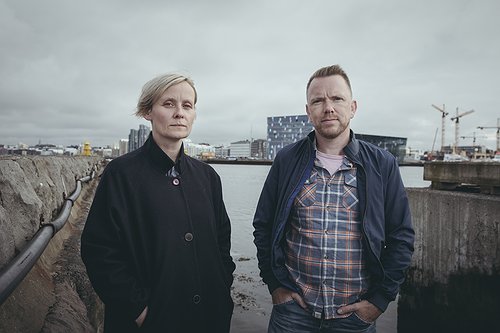
Sólveig says she admires the courage of those in attendance at the meeting for speaking in such a frank and honest manner about their situation and what was happening. "This group is very aware of the importance of the work they are doing and how badly recompensed they are for it," she says. "I was surprised to find out how conscious they were of the unfair system coupled with the low-wage policies driving companies, where people get punished harshly for working long hours or keeping many jobs, which is often necessary to afford taking part in society."
Neither could speak about specific cases, but Ragnar says that in the abstract this situation reminded him of a similar one that took place in Harpa a year ago where staff wages were lowered at the same time that the director got a 20 percent pay rise. "Staff at Harpa decided to stand in solidarity against management's decision. It's a good example of management's tragic attitudes towards staff. Fortunately many companies do not think this way, instead tending to their human resources instead of looking at them as numbers that they can manipulate in every which way to make that Excel spreadsheet look better."
Sólveig says that often difficulties arise because of a rift between staff and management. "Managers are often put in charge of large groups of individuals, made responsible to manage their work, but it's very rare for the staff to have a say in how work is scheduled and that their voices are listened to, even though they themselves are often the best equipped to solve the problems. Those sorts of managers and bosses see us working class and low-wage labourers as abundant and easily replaceable. Instead of forming good relationships with their staff and respecting each and every one, these bosses often think it's easier to just hire new staff."
Ragnar adds in: "We will assist our people with every tool at our disposal."
Paulo has since then started working at his local pub and is seeking help from a mental health professional. "The healing process for what ails me isn't counted in weeks or months, but a longer period than that," he says.
Other staff that Stundin spoke to is either still working at the hotel or has moved on.
--
This story originally ran on March 8 in Icelandic. None of the details have been changed in the translation. On the day it was published maids at hotels went on a one-day strike. Since then, Efling and VR have held a number of strike actions, including that of all hotels and bus companies on March 22. There were further strikes planned on March 28 and 29, which the manager of the Icelandic Travel Industry Association warned could cost up to half a billion ISK, but they were cancelled after progress was made in the collective wage negotiations.
In the original article a source from Radisson Blu 1919 claimed hotel maids had been given misleading information on the strikes, suggesting that if they took part in them that they would not get paid. The hotel manager vehemently denied this. It has since come to light that numerous hotels employed strikebreakers and attempted to skirt the strike laws on the two days they were in effect.
Further strikes within the tourism industry were not needed as new collective agreements were signed.




















Athugasemdir