
It is ridiculous for Iceland to participate in the Eurovision Song Contest when the competition is being held in Israel, a state that tramples human rights.
As Iceland is in fact participating, however, it is important that the artist representing the Icelandic nation uses his or her agenda-setting power to the utmost in order to criticize the actions of the State of Israel and point out the absurdity of singing, dancing, and jumping around on stage while millions of people in the immediate vicinity live penned-in and oppressed.
This is the position that Hatari's members, Matthías Tryggvi Haraldsson, Einar Stefánsson, and Klemens Hannigan outlined in conversation with Stundin shortly before they won Iceland's preliminary Eurovision competition in February.
Since then, Hatari have received extensive coverage in the international media, partly due to their harsh criticism of the Israeli occupation of Palestine, and emerged as the most controversial act of Eurovision this year. As reported, Hatari have reached the very limit of the European Broadcasting Union’s tolerance for political statements.
The following interview was originally published in Icelandic on February 8, 2019. As the leather-clad techno-punk performers have advanced to the final of the Eurovision Song Contest, it is fitting that the entire interview be published in English, to help clarify Hatari’s position for the international audience. (Interview translated by Philip Roughton.)
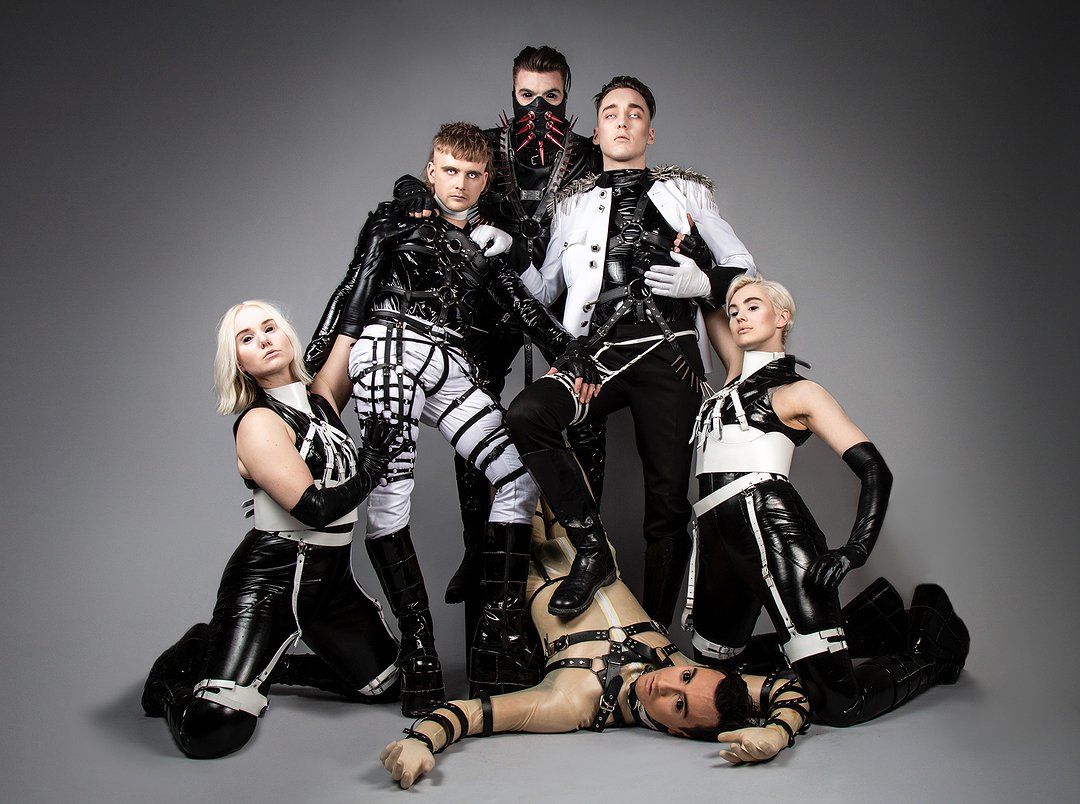
“The criticism of Hatari’s decision to participate is understandable, and a sign that plenty of Icelanders are highly opposed to the way that the Palestinians are being treated by Israel. We obviously want to respond to that criticism with respect, and without turning our response into a joke, which is what we usually do in our interactions with the media” said Hatari’s members when asked about the criticism they have received from Icelanders who oppose the Israeli occupation of Palestine.
“There’s nothing extreme about advocating a boycott of the song contest. We agree with the views behind this idea. For instance, Páll Óskar [a respected Icelandic pop-star] did well to boycott the contest publicly. In doing so, he utilized his influence as a public figure and well-known Eurovision speculator to promote critical dialogue about Israel and a possible boycott of the song contest.
“Plenty of Icelanders are highly opposed to the way that the Palestinians are being treated by Israel”
“In our opinion, the power that we hold is of a different sort: that of the court jester. Much of what Hatari does is either performance art, lies, a conveyance of messages cooked up through unconventional channels, or aesthetic experiments that dance on the border of the captivating and the strange. The agenda-setting power should, no less, involve directing the eyes of the media in a critical way to the song contest and Israel. Maybe we’ll be kicked out of the competition because of it, but that in itself would be just as revealing as any performance of ours on the Eurovision stage.”
Matthias, Klemens, and Einar say that they have discussed the situation there on the shore of the Mediterranean Sea from different angles with different people, in order to come to a better understanding of its complexities. They are appalled by the Israeli state’s treatment of the Palestinians.
“First of all, there’s the Israeli settlement activity in the Occupied Palestinian Territory, activity that’s been condemned by the United Nations but appears to have the tacit approval, if not the direct support of the State of Israel, and which seriously jeopardizes a permanent two-state solution to the Israeli-Palestinian conflict. In addition, it’s been repeatedly pointed out that the Palestinians living in Israel don’t enjoy the same rights as the Israelis, despite supposedly being citizens of the same state. Among so many other things. While the dispute is certainly complex and there are extremes on both sides, there’s no doubt that the latter-day history of Israel and the Palestinians is a case of the strong preying upon the weak; of the use of force against people who, lacking equivalent military backing, are unable to stand up for themselves.”
“Palestinians living in Israel don’t enjoy the same rights as the Israelis, despite supposedly being citizens of the same state”
The members of Hatari say that it is necessary to make a clear distinction between the State of Israel and the Israeli people. It must be kept in mind that many Israelis and Jews speak up for the rights of the Palestinians.
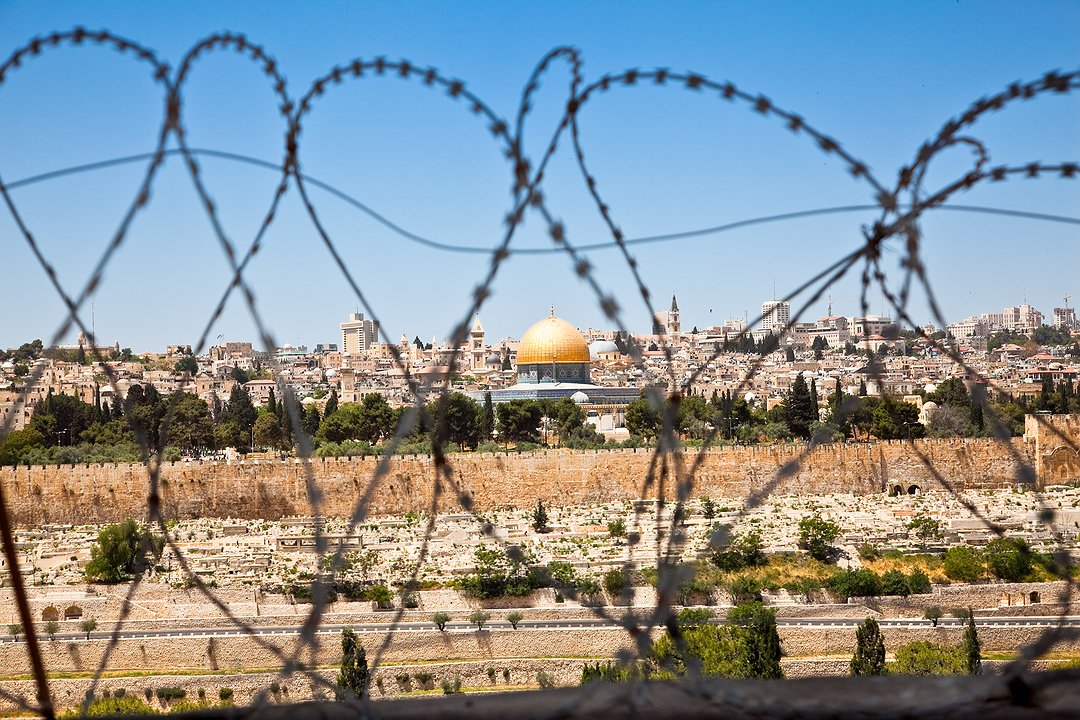
But how can Hatari justify its participation in the contest? Why doesn’t the band follow the other artists who decided to boycott the contest, and thereby send a clear message?
“We view Eurovision as a political entity; no less so than this year, when the contest is being held in Israel. The Palestinians would have been shown support through action if Iceland and other nations had simply decided to withdraw from the contest. Israel has a lot at stake in hosting the song contest, not least the promotion of its own image.
It is in fact absurd to allow a state that repeatedly violates people’s human rights to take part in such a contest, whether that state is named Israel, Russia, Qatar or anything else. Now that Iceland has decided to participate without express reservation, it’s important that whoever competes on behalf of Iceland is aware of the political nature of the contest and of the glossy image of itself that Israel will most definitely present.
“It is in fact absurd to allow a state that repeatedly violates people’s human rights to take part in such a contest”
If the artist sent by Iceland doesn’t use his or her influence to point out the obvious, the absurdity of singing, dancing, and jumping around on stage at the same time as millions who are just a stone’s throw away live with curtailed freedoms and constant uncertainty about their livelihoods and security, then the opportunity to set the agenda is wasted. If Iceland’s entry ignores the fact that the song contest is political by nature, it undervalues the need for critical dialogue concerning Israel.
We ourselves are aware of the need for such a dialogue and would like to make responsible use of the agenda-setting opportunity provided by the song contest. We’re not particularly concerned whether the producers and management of Eurovision allow us to participate or not, should we be selected to represent Iceland. They have the power to kick us out of the contest, but not to censor us beyond the borders of Israel.”

Matthías, Einar, and Klemens say that they do not view themselves as self-appointed advocates of Palestine. “We’re basically privileged kids who have chosen to play the role of court jesters in a ridiculous song contest. We also want to remain conscious of this, and in doing so address aspects that we feel fall within our purview as artists, such as the absurdity of the contest, Israel’s participation, the boundaries of art and propaganda, the glossy images, censorship, and freedom of expression.”
But can they criticize the policies of the State of Israel without violating the rules of the competition and the agreement with Icelandic State Broadcasting that the competitors sign?
“The agreement stipulates that profanity, political propaganda or anything else that could offend the sensibilities of audience members is prohibited on stage,” they say.
“It would be highly political to deliver a performance that was supposedly free of all politics“
“This in itself is a paradox, as it would be highly political to deliver a performance that was supposedly free of all politics, and it’s clear that all of the songs that will be performed on stage in Tel Aviv will in fact offend the sensibilities of many people. The glossy images drawn up in Eurovision are, in themselves, highly political in the context of the competition and the legitimate criticism leveled at it. Therefore, it’s politically impossible to honor such an agreement, and it’s not of particular importance to us whether we do so or not.
If the organizers of the song contest in Iceland decide to withdraw Iceland from Eurovision, that’s great. In light of the current situation, we feel that the most appropriate response is to send a clear message about the premises for Iceland’s participation in the Song Contest.”












Athugasemdir