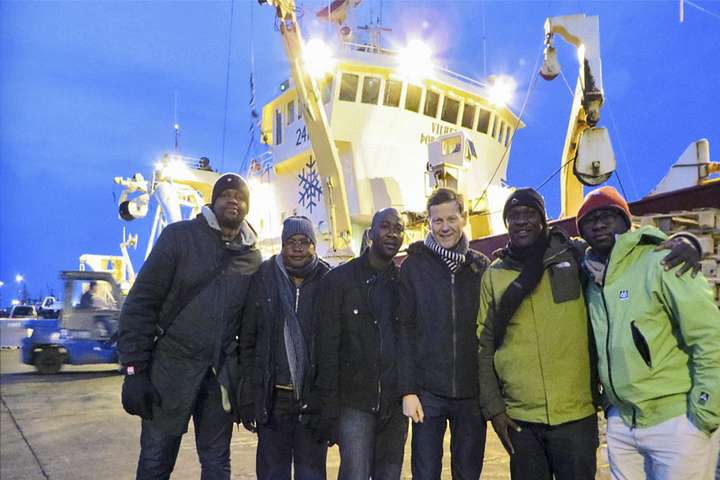

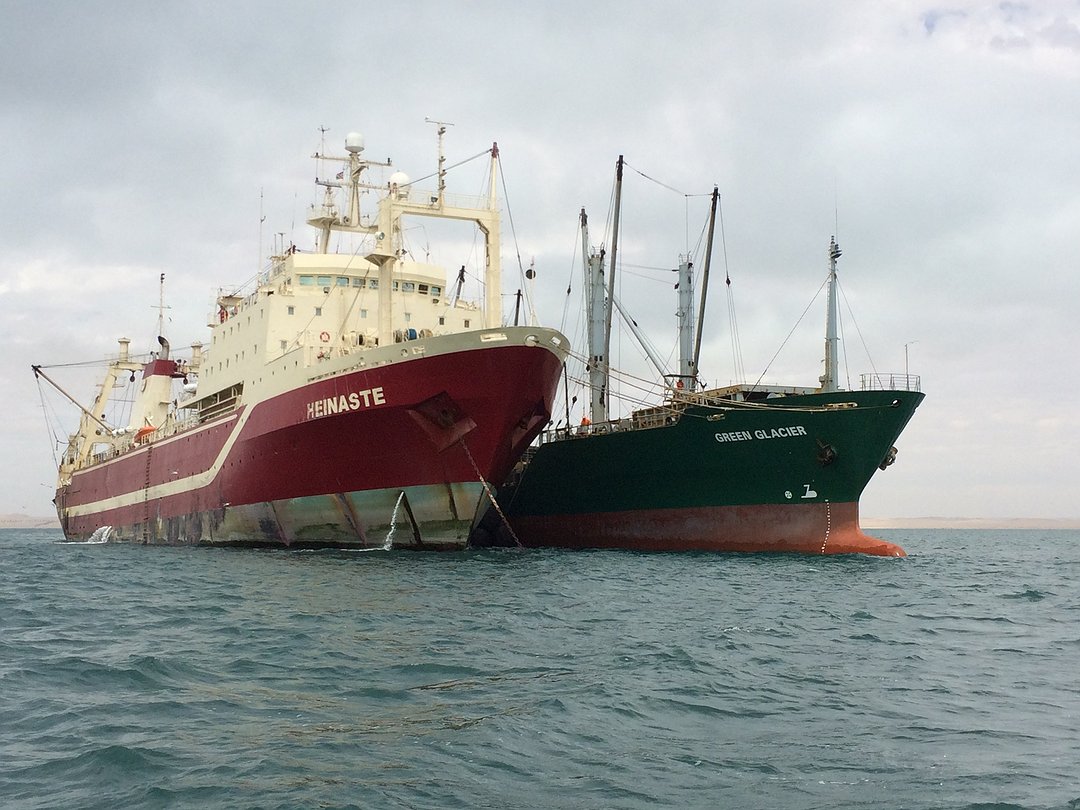
Iceland’s largest fishing company, Samherji, transfered more than 70 million dollars through a shell company in the tax haven Marshall Islands from 2011 to 2018. Samherji transferred the money through bank accounts in Norway´s largest bank DNB NOR. The bank’s largest shareholder is the Norwegian state, which holds a 34 percent stake in the bank.
The money consisted partly of proceeds from Samherji´s questionable and possibly unlawful operations in Namibia where the company bribes officials to get secure access to fishing quotas. The company in the Marshall Islands was used to pay salaries to the crews of Samherjis factory trawlers . These trawlers fished horse mackerel in Mauritania, Morocco and Namibia.
The information about Samherji’s bribes and its money transfers to tax havens and Cyprus is gathered from documents that Wikileaks made available to Stundin, the Icelandic investigative TV-program Kveikur and the Qatari TV-station Al Jazeera. Stundin is publishing the information in cooperation with these parties.
Wikileaks has published 30.000 of the documents on its webpage under the name The Fishrot Files.
"They do not hesitate to use bribes and break the law so that they can take as much money as they can out of the country.“
DNB NOR thought that the client was too risky
In May 2018 DNB NOR closed the bank accounts of the Marshall Island shell company, Cape Cod FS, after a U.S. bank, Bank of New York Mellon, declined to allow a transaction from it mother company JPC Ship Management to go through its system. The actions of the U.S. bank resulted in an investigation of the Marshall Island company, and later "off boarding", as the Norwegians called it, at DNB NOR. Off boarding a client means that a bank closes the bank accounts of the clients and cuts of all business with the client.
According to a risk assessment undertaken by the Norwegian bank, it was deemed too risky to allow Cape Cod FS to remain as a client in the bank: ”[T]he necessary resources to manage the sanction risk will be too high.” The sanction risk in this case was the possible fine that authorities in the U.S., mainly the Securities and Exchange Commission (SEC), could levy on DNB NOR because of its lax anti-money laundering controls.
After an internal investigation DNB NOR conluded that it did not have any information about the beneficial owner of Cape Cod FS. This is against the so called ”KYC-rules”, which were explicitly enacted to combat money laundering. According to the KYC-rules a bank must know the real identity of the clients, that transfer money through its systems. Samherji had been using Cape Cod for seven and a half years by the time DNB NOR discovered that it did not know the identity of the beneficial owner, even though it was Samherji that financed Cape Cod through its subsidiaries in Cyprus and Namibia.
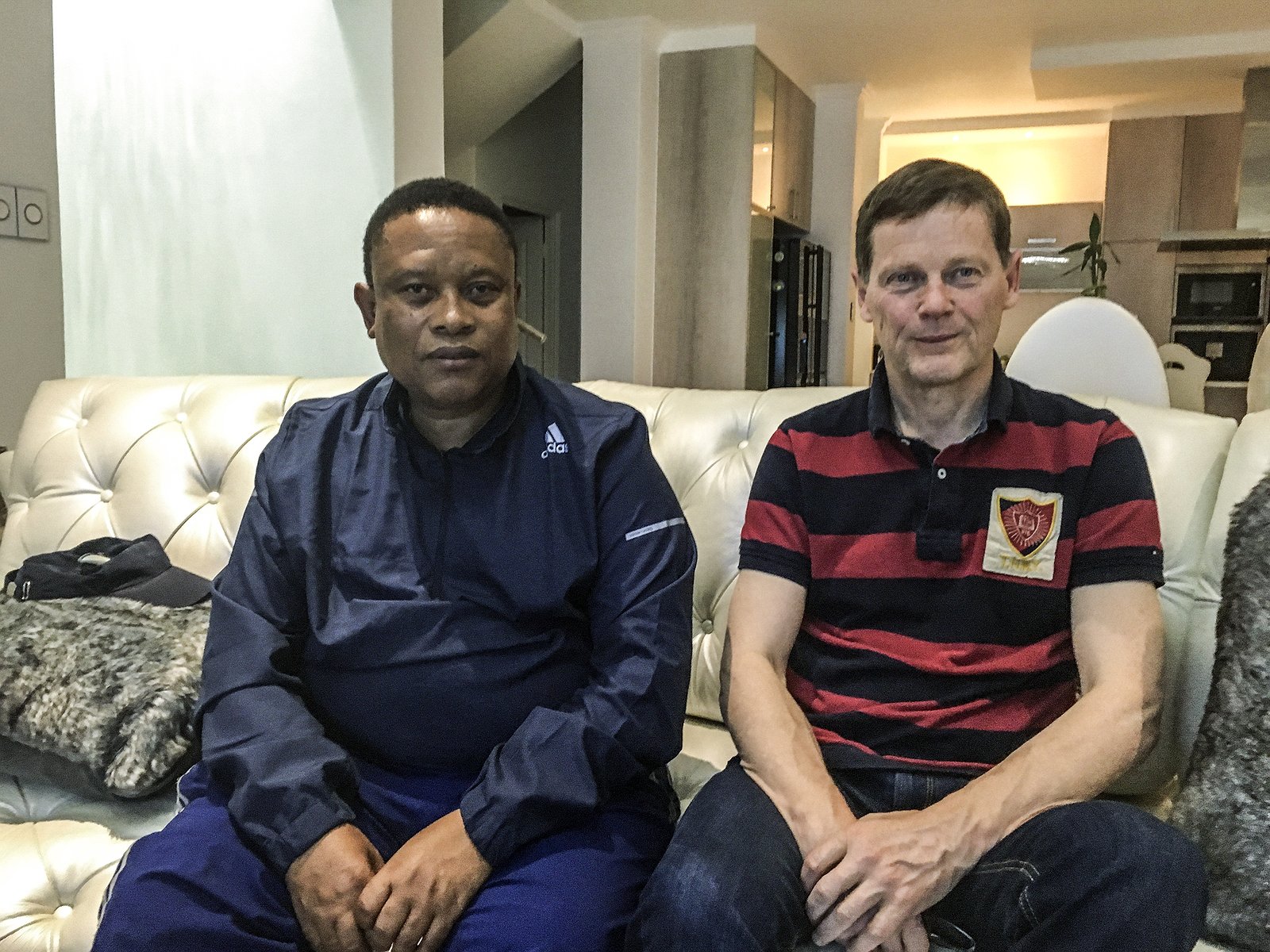
Proceeds based on corruption
The money that Samherji transferred to Cape Cod FS included proceeds of Samherji’s company in Namibia, were it caught horse mackerel using several gigantic factory trawlers, each of which was crewed by a around a hundred working men. Samherji secured access to the horse mackerel quotas in Namibia by paying bribes of around 10 million U.S. dollars to politicians and official employees in Namibia between 2012 and 2018. The bribes continued after Cape Cod FS was off-boarded as a DNB NOR client in 2018.
The politicians, officials and related parties in Namibia who took bribes from Samherji are Bernhard Esau, the fishing minister of Namibia; his son-in-law Tamson ”Fitty” Hatuikulipi, who worked as ”consultant” for Samherji; James Hatukulipi, an investor and the chairman of the board of the state owned company Fishcor which distributes fishing quotas in Namibia and Sacky Shangala, the current justice minister of Namibia and former attorney general. The fifth individual is Mike Nghipunya, the CEO of Fiscor.
Samherji’s CEO and biggest shareholder, Þorsteinn Már Baldvinsson authorized the bribe payments says Jóhannes Stefánsson, the former general manager of Samherji’s operations in Namibia. It was then Jóhannes Stefánsson who implemented the bribe payments he says. Stefánsson is now a whistleblower working with anti-corruption authorities in Namibia, and other countries, that are investigating or looking into the Samherji-affair. Mr. Stefánsson asserts that: ”Nothing is paid without his [Þorsteinn Baldvinsson's] prior consent.“
No replies from Samherji´s owners
Þorsteinn Már Baldvinsson has not been willing to grant Stundin, Kveikur or Al Jaazera interviews about the documents described here. When asked about the issue by Kveikur´s journalists, after a radio interview in Iceland at the end of October, he deflected with a comment about the weather: ”The weather out here is beautiful I think.” Þorsteinn Már said before dodged any further questions by slipping into a coffee shop.
Samherji’s second largest shareholder and de facto general manager in Iceland, Kristján Vilhelmsson, refuses to discuss the matter: When Stundin interviewed Kristján by telephone at the end of October he stated that: ”I will not answer any questions from you, not about this matter or any other. […] I do not owe you answers about anything.“
3.5 million dollars to a shell company in Dubai
One example of the extent of the bribes Samherji paid is a 3.5 million dollar payment to company called Tundavala Investments Limited in Dubai. Tundavala Investments Limited is owned by James Hatuikulipi. The payments were made from a company which Samherji owns in Cyprus, Esja Seafood Limited, one of its main international holding companies. Esja Seafood has bank accounts in DNB NOR, and those were used to make the payments under the guise of ”consulting fees“. This company in Cyprus has also paid bribes to bank accounts in Namibia, for example to a company which is owned by the son-in-law of Namibia¨s fishing minister, Tamson ”Fitty” Hatukulipi.
The individuals who took the bribes all belong to the largest and most dominant political party in Namibia, the SWAPO-party, which has received a majority of the votes in every general election since Namibia became an independent country in 1990. Bernhard Esau also sits on the politburo of the SWAPO-party which is originally a communist party that fought for Namibia’s independence from apartheid South Africa in 20th century. The party’s place and status in Namibian politics can be likened to the ANC in South-Africa; it is the dominant force in Namibian politics.
“Bribes are of course never termed ”bribes”; they are ”facilitation payments”, often made by the resource extraction companies to local companies for unspecified services and whose beneficial owner is opaque.”
For Samherji the end justifies the bribes
The payments were referred to as ”consulting fees” which is common in cases of bribery. Another euphemism which is sometimes used to hide the fact that bribery is taking place is the description of the transaction as a ”facilitation fee”. As the English economist Paul Collier, a professor at Oxford and a specialist in the economics of Africa, says in his book The Plundered Planet: Why We Must--and How We Can--Manage Nature for Global Prosperity”: "Bribes are of course never termed ”bribes”; they are ”facilitation payments”, often made by the resource extraction companies to local companies for unspecified services and whose beneficial owner is opaque.“
Jóhannes Stefánsson says that the payments were bribes even though they were couched in other language. Tamson and James had no prior knowledge or experience of the fishing industry in Namibia before they started building up their relationship with the Icelandic fishing company. What they sold to Samherji was access to political power in Namibia says Jóhannes. ”Samherji does whatever it takes to get its hands on the natural resources of other nations. The company deceives and makes empty promises all in order to exploit these resources. They do not hesitate to use bribes and break the law so that they can take as much money as they can out of the country and leave nothing behind but burnt soil and money in the pockets of a corrupt political elite.“
Jóhannes Stefánsson says that during his first meeting with Tamson the latter showed him a photograph of himself, at his own wedding with the fishing minister, Bernhard Esau, his father- in-law - Berhard Esau is the father of Tamson’s wife Ndapandula.
In most countries, including Namibia, it is illegal to bribe politicians and official employees. Similarly, it is a punishable offence to pay bribes to politicians and government officials in other countries.
Bribes and money laundering
Because Samherji´s operations in Namibia are based on the payment of bribes, which are an illegal offence in the country and in other countries where Samherji operates , the transfer of the revenue which the company´s fishing in Namibia creates can possibly be defined as money laundering. Taking into account that Samherji siphoned the money to the Marshall Islands, which is a tax haven, and that DNB NOR eventually considered the risk of maintaining Cape Cod FS as a client too high because of the possibility that the company being used to launder money, a grim picture of what Samherji was doing emerges.
Money laundering is defined as the act of introducing money, gained from unlawful activities like drug trafficking or the spoils of corruption, into "the the normal economic system” says Ólafur Hauksson, the head of the district attorneys office in Reykjavik. Iceland. - ”Money laundering is a huge problem in society because it is crime which makes it possible for criminals to use money, which is not rightfully or lawfully theirs in a legitimate way. If they succeed then this creates a further incentive for the criminals to continue making money by breaking the law.“
Unclear who owned Cape Cod FS
What is especially interesting in this case is that the documents reveal that DNB NOR bank never knew who owned Cape Cod FS and that is one the reasons why the bank declined to continue to offer services to the company last year. The financial director in one of Samherji’s daughter companies abroad, Katla Seafood in the Canary Islands, was one the three individuals who had the right to transfer money from Cape Cod FS, according to documents from 2010 which were sent in when Cape Cod FS opened bank accounts in DNB NOR. The two others were employees in a Cypriot asset management company called Cyproservice. In these documents it is declared that Cape Cod FS had its tax liability in the Marshall Islands.
Cape Cod FS was said to be owned by a shipping company in Cyprus called JPC Ship Management, a German owned staffing agency which operates in Cyprus. This company supplied the Samherji’s trawlers in Africa with employees from the Baltic states and the Ukraine - Samherji called them ”Russians” in internal e-mails - for these services JPC got 11 dollars per person a month. Technically, JPC Ship Management was never the owner of Cape Cod since all its money came from Samherji and its companies in Cyprus and Namibia. JPC Ship Management seems to have simply been the stated owner of Cape Cod from 2010 to 2018 whereas Samherji was indeed the company that financed and used Cape Cod. The front company in such a scheme, where the real owner of company is hidden from view by another company which serves as its cover, is called a ”rathole” in the parlance of money laundering.
The company “no longer under” Samherji
Even though DNB NOR never received verification of who the beneficial owner of Cape Cod was, the bank thought that the company belonged to Samherji. In a risk analysis, the bank said it had “no knowledge” who the beneficial owner was but in the documents where the bank stated why it decided to kick Cape Cod FS out of the bank as a client by closing its bank accounts it said. “No longer under Samherji. Three individuals own the company.”
The three individuals referred to where the owners of JPC Ship Management. Even though the bank stated this, its employees did not believe that this was the case as it was the banks assessment that it in fact had ”no knowledge” about who owned Cape Cod FS.
The man in charge does not remember the company
Brynjar Þórsson, the former financial director of Katla Seafood in the Canary Islands, and the person who was in charge of running the company’s bank accounts according to an internal document from Samherji, says he does not remember Cape Cod FS. ”I have to admit that I do not remember this name” he says. ”I did the money transfers to the employees of the ships, I do not deny that, but I do not remember which bank accounts I used.”
Þórsson worked for Kata Seafood and Samherji for two and a half years after Cape Cod FS opened its bank accounts in DNB NOR. In the summer of 2013 Samherji sold Katla Seafood to the Russian fishing magnate Vitali Orlov and his company Murmansk Trawl Fleet. Þórsson continued working for Orlov until the end of 2015.
So Brynjar Þórsson did not work for Samherji the whole time that the company used Cape Cod FS, from 2011 to 2018, and there were many money transactions from Namibia to the accounts of Cape Cod FS, after he quit working for Samherji. It therefore must be emphasized that Brynjar does not bear responsibility for all the transactions through Cape Cod FS and he had nothing to do with Samherji’s bribes in Namibia.
While Cape Cod FS was active it transferred 70 million dollaras in more than 13 thousand transfers from 2011 til 2018.
Samherji stayed on as a customer of DNB NOR
What is remarkable about what happened after DNB NOR closed the bank accounts of Cape Cod FS is that this fact had no influence whatsoever on the Norwegian bank’s business relationship with other companies which Samherji owns, and the company was allowed to continue to use its various others bank accounts in DNB NOR. Among those were the bank accounts of the company Esja Seafood which was used to pay bribes to Namibians, James and Tamson Hatuikulipi, in Dubai and Namibia.
DNB NOR thought that allowing Cape Cod to continue as the bank’s client was too risky, but nevertheless allowed Samherji, which according to the bank´s own assessment had controlled the Marshall Island company, to continue as a large client in the bank.
Samherji is still DNB NOR´s client and the Norwegian bank is the fishing company’s hub abroad, its main business bank.
Browder´s war on money-laundering in Nordic banks
The story of Samherji using a shell company in the tax haven of Marshall Islands through DNB NOR may not come as surprise to those who have followed the debate about money laundering in the Nordic countries of Sweden, Finland, Denmark Norway and Iceland over the last year.
In 2018 and 2019 media in Sweden published stories about how the Baltic affiliates of Denmark´s largest bank, Danske Bank, and Swedbank in Sweden had been used to launder money from criminal activities in Russia. These scandals caused a stir and had many consequences, e.g. Swedbank’s CEO, Birgitte Bonnesen, was forced to leave her job and Sweden’s former PM, Göran Persson, was appointed as the chairman of the board of the Swedish bank to try to clean up after the scandal.
On the basis of these reports the American investor, hedge fund manager and former resident of Russia, Bill Browder, who is one of Vladimir´s Putin’s harshest critics, has tried to get prosecutors in Denmark, Finland and Sweden to open criminal investigations into the money laundering which took place in banks in the Nordic countries.
Browder believes that Putin was behind the killing of his lawyer Sergei Magnitsky in 2009 and he has thrashed the money laundering controls of the Nordic countries. He claims that Nordic banks aided Putin and his cronies to launder money that they stole from him and his hedge fond, Hermitage Capital Managment. According to Browder the killing of Magnitsky was in part to cover up the fact that money was stolen from his company. Browder makes the argument that the banks who assist criminals who launder money from Russia are collaborating with the forces who killed Magnitsky and that they are therefore ”second or third order crooks”.
In an interview with The Wall Street Journal earlier this year Browder was asked how this could happen in the Nordic countries, nation states which are supposed to be among the least corrupt in the world: ”Well, what I can say about Denmark … Every law firm in town has some business with Danske Bank. We’ve been looking for a lawyer in Denmark, and everybody is conflicted. Everyone sort of trusts everybody. What it does is it means if somebody has done something bad, they don’t really have the psychological infrastructure to come down like a ton of bricks on the people that did bad stuff, because everybody assumes maybe they didn’t, and they said they didn’t, and so on and so forth.”
As of to date nothing has come out of Bill Browder’s attempts to get authorities in the Scandinavian countries to open these criminal investigations.
DNB NOR doesn't know how many clients it off boards
Like the banks which Browder has been criticising DNB NOR has also been criticised for its poor controls against money laundering and financing of terrorism. The Financial Supervisory Authority (FSA) of Norway has said that the bank did not take sufficient care to monitor its client transactions through the bank and that it therefore risked being a vehicle for money laundering. The institution did say in a report published last year that it seemed to be the case that DNB NOR had improved its monitoring of possible money laundering in the bank. In a FSA report published in in August this year the institution said agin that it found shortcomings in DNB NOR´s controls against money laundering. “The company’s overall follow-up and coordination of AML [Anti-money laundering] has not been satisfactory.”
The information about how the Icelandic fishing company Samherji has used DNB NOR for many years to transfer money to and from a company in The Marshall Islands seems to be one example of the poor the controls of DNB NOR against money laundering. It was not until the American bank, Bank of New York Mellon, stopped a money transfer from Cape Cod FS that the Norwegian bank finally off boarded the company because it did not know who its beneficial owner was.
DNB NOR’s spokesman, Even Westerveld, says in his answers to general questions concerning how the bank fights money laundering within the bank that it does not know how often it happens that a client’s account is closed because the beneficial owner is not known or because it is believed that the client is engaging in money laundering through the bank. ”Like every other bank we are guided to take action if the clients do not give us the necessary information that we need to have so that the bank can have a good control over how the client uses the bank. This can sometimes mean that the bank freezes the accounts of clients or off boards him. Unfortunately we do not officially hold count how often this happens within the bank,” says Westerveld.
DNB NOR´s spokesman says that the bank cannot answer the question how many cases of possible money laundering the bank has sent to the police in Norway in the last few years. ”Unfortunately we cannot go out with that type of information […] The war on money-laundering is a fight against organised criminal networks that are constantly developing new methods. At the same time the regulatory frameworks must at the same time change itself and evolve accordingly. Therefore we will never reach our goal but must instead work constantly towards improving our methods.“
To date Samherji’s use of DNB NOR for these transactions from 2011 to 2018 has not had any repercussions. Not for Samherji, or for DNB NOR.
Samherjaskjölin

Ágreiningsmál fyrir dómi tefja ákærur í Samherjamálinu

Vonast til að rannsókn á Samherjamáli ljúki í sumar
„Tími á að íslensk stjórnvöld axli siðferðislega ábyrgð á Samherja“
Samherji sakaður um stórfelld skattalaga- og gjaldeyrisbrot í Namibíu og framsalskrafa væntanleg

Íslandsvinkona svo gott sem orðin forseti Namibíu








Athugasemdir